On Monday, April 20, 2026, Manibela announced a three-day transport strike from Tuesday, April 21, to Thursday, April 23, despite President Ferdinand Marcos Jr.'s announcement of a significant fuel price rollback effective Tuesday. Mar Valbuena, chair of Manibela, stated that the government has not done enough to address the impact of successive oil price increases, even as he acknowledged the price spike is due to the US and Israel war against Iran.
Fuel Price Reductions and Demands
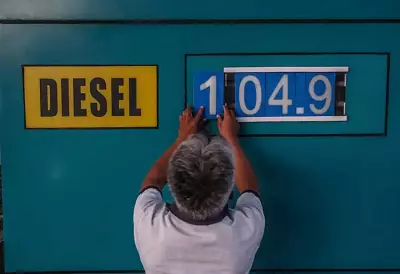
Beginning April 14, diesel prices dropped by P20.89 per liter, gasoline by P4.43 per liter, and kerosene by P8.50 per liter. Valbuena argued that diesel, which powers trucks and public utility vehicles (PUVs), should return to at least P55 per liter.
Third Transport Action Over Fuel Prices
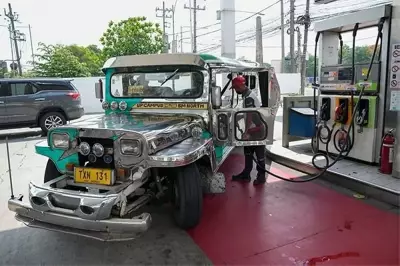
According to news reports, the strike was the third transport action staged by jeepney drivers over soaring fuel prices linked to the conflict. Piston previously went on strike from March 19 to 20 and again from March 26 to 27, rejoining the protest on Monday. Valbuena said at least 80,000 members are expected to join the mass action in Metro Manila and other areas, including Cebu, Bacolod, Iloilo, Tacloban, Ormoc, Samar, Catbalogan, Catarman, Iligan, Ozamiz, General Santos City, Davao, and Cagayan de Oro.

Government Response and Service Contracting Program
To counter these strikes, the government offered a new service contracting program that started April 15, 2026. This program provides jeepney drivers with an estimated income of P1,800 a day, which is six times higher than the reported P300 net income of those who do not participate. Transportation Undersecretary Mark Steven Pastor revealed during a hearing of the ad hoc Senate committee called the Proactive Response and Oversight for Timely and Effective Crisis Strategy (Protect) that there are 36,000 participants out of approximately 176,000 jeepney drivers nationwide. Pastor explained the P1,800 represents the remainder of a P5,000 gross income after deducting diesel costs, the "boundary" paid to operators, and the service contracting subsidy.
Diminishing Impact of Strikes
The days when a transport strike carried moral force—indicating something was deeply wrong—have passed. Today, that signal is diluted. Fuel prices have decreased, yet protests persist. Financial assistance is provided, but disruptions continue. For commuters, the question grows sharper: What exactly will satisfy these groups? This perspective does not dismiss the drivers' concerns entirely.
Unresolved Deeper Issues
Deeper issues remain unresolved, including uncertainty over modernization, the financial burden of compliance, and a regulatory environment under the Land Transportation Franchising and Regulatory Board (LTFRB) that often feels more punitive than supportive. For many drivers, each policy shift carries an existential risk. The fear is not temporary hardship, but permanent displacement.
Protest Methods Under Scrutiny
However, this is where the protest loses its footing. When every grievance leads to the same response—strike, disrupt, repeat—the public begins to detach. Sympathy fades and understanding turns into silent resistance. In that shift, the drivers' cause, however valid, weakens under the weight of its own methods. A protest that no longer persuades becomes mere noise.
Systemic Failure and Possible Solutions
This leads to a more uncomfortable question: Is the system itself the real failure? Our public transport is privately run but loosely regulated, and the riding public relies heavily upon it. It is a system built on necessity and strained by constant friction. Drivers operate as entrepreneurs without security, the government regulates without fully providing, and the public depends on a service that can stop at any moment.
International Example: Victoria, Australia
The public transport system in Victoria, Australia, serves as a notable example. There, buses and trains are not left to fragmented operators; the system is planned, funded, and overseen by the government. Services run because the system is designed to function. Amid fuel issues there, commuters reportedly ride free on buses and trains.

Could Government Operation Be the Answer?
Could government operation be the answer to endless strikes? Replication is not simple, as the Victoria model rests on strong institutions and decades of planning. Imposing it overnight in a Philippine setting risks creating bureaucracy and the displacement of thousands of drivers. The challenge is to end the cycle that makes the next strike inevitable and ensure the system can finally stand on its own.