Davao del Sur Kicks Off Annual Mass Deworming Program with ₱1.8 Million Investment
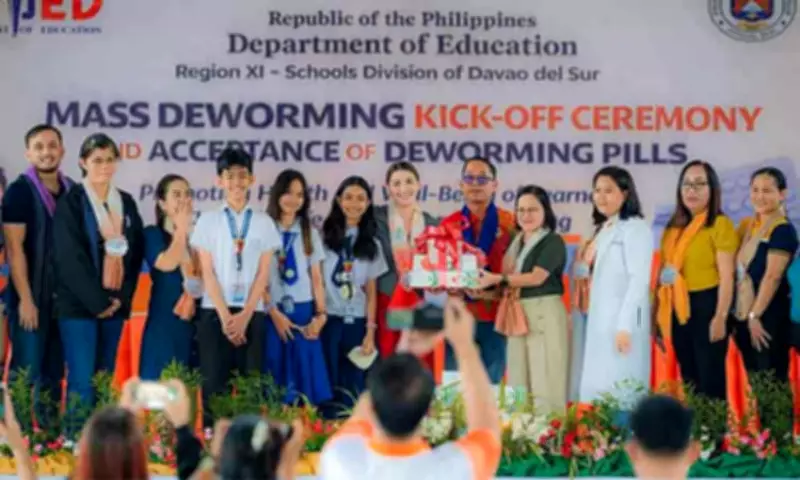
Hundreds of students assembled at Sulop National High School on February 13 as the Provincial Government of Davao del Sur and the Department of Education (DepEd) Davao del Sur Division officially launched this year's provincewide Mass Deworming Program. The kickoff ceremony marked the formal acceptance of deworming tablets that will be distributed to public school students from elementary to senior high school across the province.
The provincial government has allocated ₱1.8 million for the purchase of these medicines, reinforcing what officials describe as a continuing investment in child health and education. Governor Yvonne R. Cagas, who led the activity alongside 2nd District Board Members Atty. Gladys Gascon, Dyane Idulsa, Mark Joel Gallardo, and Atty. Carmelo delos Cientos III (represented by Honeyboy delos Cientos), emphasized the broader purpose of the initiative.
Why Deworming Matters for Student Health and Learning
Governor Cagas stated, "This initiative reflects our strong commitment in ensuring that every child grows healthy, active, and ready to learn. By conducting this mass deworming activity, we are not only preventing illness but also promoting better nutrition for our children, improve school performance and overall well-being." Health authorities have long identified soil-transmitted helminth infections, commonly known as intestinal worms, as a persistent public health concern among school-age children, particularly in developing countries.

According to the World Health Organization (WHO), more than 1.5 billion people worldwide are infected with soil-transmitted helminths, with school-age children among the most vulnerable. Worm infections can lead to malnutrition, anemia, stunted growth, and impaired cognitive development. WHO notes that regular preventive chemotherapy, or mass deworming, is a safe and cost-effective intervention that significantly reduces worm burden and improves children's nutritional status.
The Department of Health (DOH) has similarly emphasized that periodic school-based deworming helps prevent chronic infections that may affect children's concentration, energy levels, and overall academic performance. Studies cited by global health institutions show that deworming programs can contribute to improved school attendance and classroom participation, particularly in high-risk communities.
Integrating Health Programs in Schools for Equity and Efficiency
By integrating health programs within the school setting, DepEd ensures that treatment reaches a large number of children efficiently and equitably—especially those who may have limited access to routine healthcare services. Dr. Michelle Macasayon, medical officer III at DepEd-Davao del Sur Division, highlighted the agency's deworming program, saying it is crucial for learners to be free from parasites as these are proven to affect students' learning capacity.
Dr. Macasayon explained, "If a child has intestinal worms, they easily get tired, their hemoglobin level drops—what we call anemia. In short, they cannot actively participate in their studies, they cannot study well, they are always weak, so they are unable to properly absorb their lessons. Their overall well-being is affected if they have worms." She also revealed that the ₱1.8 million was used to purchase Albendazole chewable 400mg tablets, an anthelmintic medicine for treating various parasitic worm infections, including roundworms, hookworms, pinworms, whipworms, and tapeworms, by inhibiting parasite growth.
Health and Education: A Synergistic Approach for Student Success
For teachers on the ground, the program represents more than compliance with national health guidelines; it is about safeguarding students' ability to thrive in school. Rhizter M. Rafaela, a teacher at Sulop National High School, expressed gratitude, stating, "Witnessing the dazzling beauty of our beloved Governor feels like a breath of relief. Thank you, Gov, for your presence, which has graced our institution with all the support and a wonderful future."

Rafaela added, "We're on the verge of beholding the wonderful plans in the department of education, creating and shaping minds full of knowledge, skills, and most of all, the values. With the students' deworming kick off and activity, we felt as if the provider is near to us and will have wonderful plans for our students, teachers, schools, and most of all, the province of Davao del Sur."
Meanwhile, Dr. Macasayon noted that deworming helps in achieving students' full potential, expressing gratitude to the provincial government leaders. She mentioned that before, the agency could not cover all schools in the province with its deworming program, especially during the pandemic era, but now, with the help of the provincial government, she is assured that no learners will be left behind in this program.
Investing in the Province's Future Through Health Initiatives
The ₱1.8-million allocation signals the provincial government's recognition that healthy children are foundational to long-term development. By reducing preventable health burdens, officials hope to create a more conducive learning environment, one where students are physically prepared to absorb lessons and participate fully in school life. The annual mass deworming complements other school health initiatives, reinforcing a holistic approach to education and well-being in Davao del Sur.