
Cebuano Cinema's Struggle for Recognition Beyond Borrowed Spotlight
For years, Cebu has been celebrated as a picturesque backdrop, with its stunning landscapes frequently borrowed by international productions that capture global attention before moving on. When South Korean superstar Kim Jisoo recently filmed across the province, Cebuanos naturally felt pride, sharing and claiming the moment as their own. Yet this raises a critical question: why does Cebu seem to gain visibility primarily when seen through someone else's lens rather than through the authentic voices of Cebuano storytellers?
A Film That Sparks Essential Conversations
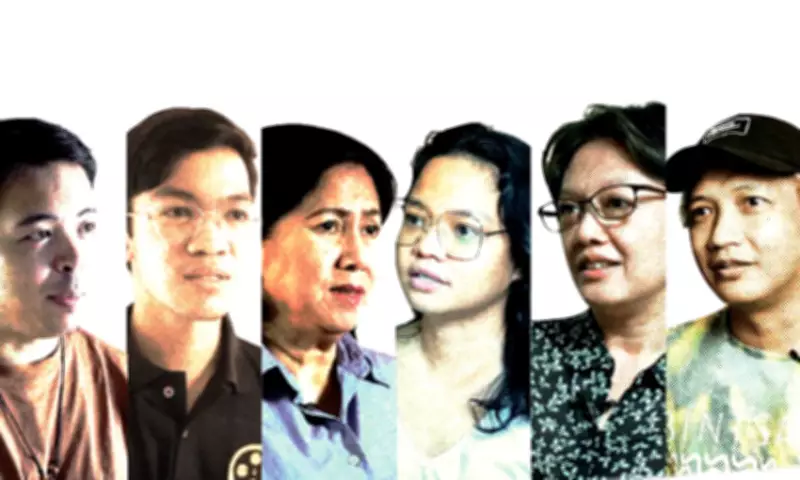
This fundamental question lies at the heart of "Cinebuano," a 20-minute award-winning documentary by filmmaker Joaquin Perocillo. Through interviews with prominent figures including actress Chai Fonacier, filmmaker Suzette Ranillo, intellectual property lawyer Grace Marie Lopez, directors Victor Villanueva and Keith Deligero, and Cinemata alumnus Carl Lara, the film weaves together memory and contemporary reality. Three years after its initial release, "Cinebuano" continues to chart the past, present, and fragile future of Cebuano cinema, remaining freely accessible on YouTube for all to view.
"I produced and directed 'Cinebuano' as my thesis at Mapúa University to share a part of our country's history that even some Cebuanos aren't familiar with," Perocillo explained in a March 2026 interview. "I know a 20-minute documentary won't solve everything overnight, but I wanted it to be a starting point for a bigger conversation—a way to raise awareness, give Cebuano cinema the recognition it deserves, and hopefully inspire Bisaya creatives to keep making films." He emphasizes that the documentary serves as "a reminder that cinema is alive, not just in the capital, but in the regions as well."

Remembering a Prolific Golden Age
The historical foundation of Cebuano cinema is remarkably rich. "Cebuano industries in the '50s, '60s, '70s—how would I describe it?" reflected Lopez, a film professor and legal expert. "A very prolific cinema. We had an industry then." From the 1950s through the 1970s, Cebuano films flourished as a self-sustaining ecosystem, with iconic stars like Gloria Sevilla and Mat Ranillo Jr. reaching audiences far beyond the Visayas region.
A native of Sibonga, Sevilla starred alongside Ranillo in "Badlis sa Kinabuhi," earning her first Famas Awards Best Actress win. She repeated this achievement four years later with "Gimingaw Ako." "They were box office hits, real hits," recalled Suzette Ranillo, daughter of the celebrated King and Queen of Visayan film, describing an era where productions overlapped continuously due to relentless audience demand.
Today, that golden age feels increasingly distant. Historic structures like Vision Theatre and Oriente Theatre still stand physically, but no longer function as temples of cinematic storytelling. "Vision is still a structure," Lopez noted wistfully, "but they're not showing anything." Instead, these spaces now house pirated DVDs and CDs—an ironic symbol of what has been lost.
A Cinema Rediscovered by Outsiders
The documentary highlights a recurring paradox: Cebuano cinema is often rediscovered by non-locals before gaining recognition within its own community. Director Keith Deligero frames this irony through the work of scholars who documented what many had overlooked—what he calls the "lost pages" of Cebuano film history. Researchers like Paul Grant and Misha Anissimov played crucial roles in preserving this forgotten heritage.
"There are great academic resources available like the book 'Lilas,' published by USC Press and written by Dr. Grant and Prof. Anissimov from the University of San Carlos Graduate School of Cinema Studies," shared Perocillo. "The book provides an overview of the 'Golden Ages' of Cebuano cinema in the 1950s and 1970s."

Interestingly, Perocillo himself is not originally from Cebu, yet his personal connection to the city inspired the documentary's creation. "I was born in Muntinlupa. My dad is from Masbate and my mom is from Rizal. I lived in Bacoor, Cavite until I was 10, then my family moved to Cebu City, where I lived for 11 years," he shared. Despite not being Cebuano by birth, Perocillo was driven to create a platform that would open Cebuanos' eyes to their own rich cinematic history.
Signs of Modern Resurgence
Yet the narrative isn't solely about loss. The 2010s marked what many consider a modern resurgence for Cebuano cinema. Films like "Patay na si Hesus" broke significant barriers, while initiatives such as the Binisaya Film Festival successfully brought cinema directly to public spaces.
"Binisaya is one of the avenues that can help elevate the film scene here," explained Carl Lara, emphasizing how access and community remain central to survival. "The BisayaFlix app, launched in 2024, has been a game-changer, giving directors and producers a platform to showcase their work through a subscription-based model. We're seeing student filmmakers from Cebu producing award-winning short films, and independent full-length films in Cebuano are still being made despite the challenges. Year after year, Cebuano cinema maintains its presence in national and regional film festivals across the Philippines," said Perocillo.
But as actress Chai Fonacier poignantly asks, in a nation comprising thousands of islands, "how many islands do we have and that also means how many stories do we have and how many of these stories are not being told?"
Persistent Structural Barriers
Despite these positive developments, structural challenges continue to hinder progress. Many featured directors and talents feel compelled to relocate to Manila to find opportunities, even though the Visayas and Mindanao regions contain a substantial Cebuano-speaking population. "That means there should be a market for Cebuano films," Lopez pointed out logically.
Yet persistent perceptions create additional barriers. "When they hear that your film is Bisaya, it's considered limited," she added. Director Victor Villanueva echoed this sentiment: "To break the stigma that proper entertainment has to be Tagalog." Actress Fonacier further explained, "There are investors who want to invest in cinema but don't want to invest in regional cinema because to them, it won't sell."
"Cinema is a capital-intensive industry," Lopez emphasized, highlighting why regional productions struggle to compete financially. This gap becomes even more apparent through policy shortcomings. Filmmakers consistently question the 30 percent amusement tax, widely viewed as an excessive burden on local productions. When Cebu City approved a five percent tax reduction for a celebrity concert in 2025, it raised a critical comparison: if incentives can be granted for one-night events, why not for films that require years of dedicated creation?
Many industry advocates believe the solution lies in consistency. A standardized system coupled with long-term support could potentially stabilize the industry. As Perocillo observes, Cebuano filmmakers frequently sustain the scene themselves, "funding films out of their own pockets or relying on grants from Metro Manila." Despite these challenges, the community persists resiliently. "Since Cinebuano's premiere in 2023, I've noticed that the scene is still largely kept alive by community efforts," Perocillo noted. "The community may be small, but the talent is amazing."
Looking Forward with Cautious Optimism
Emerging signs of hope offer encouragement for the future. A proposed Creative Entertainment District aims to position Cebu as a central hub for creatives. If successfully realized, Perocillo believes it "could have a lasting, positive impact on the future of Cebuano cinema."
Ultimately, Cebuano cinema exists in a delicate space between persistent struggle and genuine possibility. As reflected throughout "Cinebuano," its future depends not only on raw talent but on strategic alignment—expertise-building, audience development, and meaningful institutional support. What filmmakers are requesting isn't excessive. As the documentary's voices collectively suggest, the call is simply for consistency: not one-time gestures, but sustained collaboration, policies that lower barriers, spaces that nurture growth, and systems that allow Cebuano stories to be told authentically on their own terms, rather than borrowed temporarily through external lenses.