

Beyond the Game: How Super Bowl Halftime Shows Became Cultural Landmarks
Every Super Bowl, over a hundred million viewers worldwide tune in to witness a sporting spectacle unlike any other. However, somewhere between dramatic touchdowns and strategic timeouts, the stadium undergoes a remarkable transformation into the planet's most expansive stage. For precisely thirteen to fifteen minutes, music completely takes command of the event.
Following the successfully concluded thirteen-minute performance by Bad Bunny—a set that felt like a vibrant, rhythmic geography lesson—we were powerfully reminded that the Super Bowl halftime show is never merely about visual spectacle. It is fundamentally about culture. His performance, which brought Puerto Rico directly to the center of the global stage, was densely packed with collaborators, energetic dancers, and live musicians. This underscores a crucial truth: at the heart of every halftime production is not just the headline artist, but the collective of people who constitute the totality of the show. Each year's performance becomes instant social media history—choreographed intentionally for virality, yet deeply rooted in cultural identity.
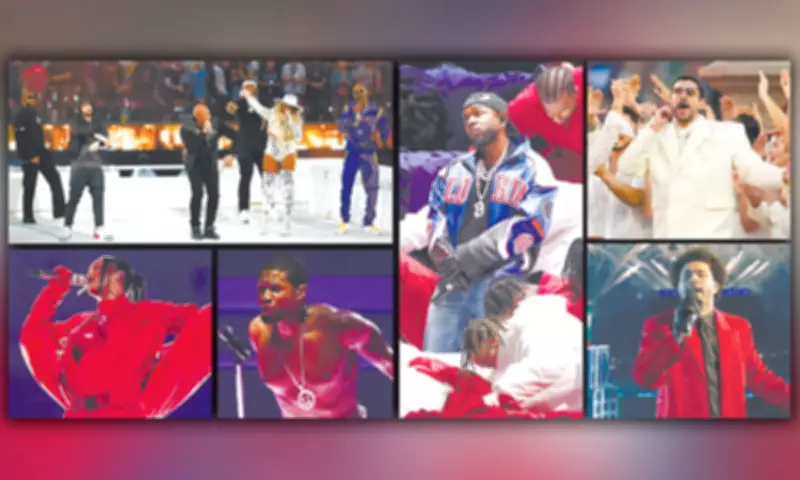
A Five-Year Retrospective of Meaningful Halftime Artistry
Here is an in-depth look back at the last five years and the visionary artists who made the Super Bowl halftime stage profoundly meaningful.

The Weeknd (2021)
Against a dramatic backdrop of a perfectly synchronized choir, The Weeknd opened his nearly fourteen-minute performance with a gospel-leaning rendition of "Call Out My Name," immediately establishing a haunting, atmospheric tone. What appeared like a neon-lit Las Vegas strip spectacularly unfolded inside the stadium—a clear visual nod to the decadent, dizzying world of his After Hours album era.
Dressed in his now-iconic red blazer and black tie, he eschewed multiple costume changes to command attention. Instead, he leaned fully into the complex character he had meticulously built throughout his album cycle. The dark R&B and alternative production came vividly alive as dancers wrapped in distinctive facial bandages—a direct reference to his After Hours conceptual narrative—moved in precise, calculated formations. When they flooded the field in intricate lines and circles, they resembled almost human drones marching in hypnotic symmetry.
He performed major hits including "I Feel It Coming," "Save Your Tears," and "Earned It," accompanied dramatically by violinists that elevated the entire cinematic mood. Entering the field powerfully with "House of Balloons / Glass Table Girls," he closed with the explosive anthem "Blinding Lights," as fireworks erupted brilliantly behind him. The show was immersive, deeply theatrical, and perfectly aligned with the artistic world he had created.
Dr. Dre, Snoop Dogg, Eminem, Mary J. Blige, Kendrick Lamar & 50 Cent (2022)
If hip-hop stands as the most dominant musical genre of our time, then the NFL's decision to assemble generational rap royalty definitively cemented the 2022 halftime show as one of the most culturally significant in history.
The spectacle opened with Dr. Dre seated commandingly behind a massive white mixing desk rising from the roof of a detailed Compton home replica. The ambitious staging—reportedly costing millions—featured a train of boxes, vibrant house party visuals, and even a gigantic map of Compton that served as the foundational centerpiece of the performance. The implication was unmistakable: Dre is the visionary architect who helped elevate West Coast rap to the world's biggest platform.
Iconic hits followed one after another in rapid succession. Each legendary artist had their own designated "box" resembling individual studio rooms—a visual theme reminiscent of the pandemic era when audiences consumed performances from isolated spaces. Despite the immense collective star power, the show was remarkably balanced. It felt like a masterclass on the monumental rise of West Coast rap and the sons of Compton who irrevocably changed music history.
The landmark performance earned widespread critical acclaim and later became the first Super Bowl halftime show ever to win the prestigious Primetime Emmy Award for Outstanding Variety Special (Live).

Rihanna (2023)
Floating elegantly on LED-lit platforms suspended high above the field, Rihanna delivered a performance that was both effortlessly cool and truly monumental—all while visibly pregnant.
Dressed strikingly in red and surrounded by dancers in oversized white puffer suits that instantly became meme-worthy, she opened powerfully with "Bitch Better Have My Money" and moved seamlessly through a tight run of global hits including "Where Have You Been," "Only Girl (In the World)," "We Found Love," "Work," "Umbrella," and "Diamonds." It served as a stunning reminder of just how deep and influential her catalog truly runs.
The choreography became one of the most remembered in Super Bowl history—a hard-hitting, street-dance–driven spectacle. Dancers were suspended dramatically in the air on floating platforms, marched in crisp, military-like formations across the field, and even crawled across the stage in sharp, perfectly synchronized movements. They were not merely background performers; they were the undeniable pulse of the entire show, moving with incredible precision while clearly enjoying themselves.
With minimal guest appearances and maximum confidence, Rihanna transformed a medley of hits into a powerful personal statement. It was not about doing the most; it was fundamentally about pure, commanding presence.
Usher (2024)
Usher brought the electrifying energy of his Las Vegas residency straight to the Super Bowl stage. The production was densely packed with dynamic movement—from thrilling roller-skating sequences to high-octane choreography that proved definitively why he remains one of R&B's greatest performers.
He delivered hit after iconic hit: "Yeah!," "Burn," "U Got It Bad," and "Love in This Club," transitioning seamlessly between stages that shifted ingeniously in design and elevation. At one breathtaking point, it appeared as though he was dancing within a dramatic ring of fire during "Burn," the flames mirroring the intense passion of the song.
The show featured surprise, celebrated appearances from Alicia Keys, H.E.R., Ludacris, and Lil Jon, turning the performance into a full-blown celebration of early-2000s R&B and hip-hop nostalgia. Usher did not just perform—he reminded global audiences of the precision, stamina, and sheer charisma required to headline the world's biggest stage.
Kendrick Lamar (2025)
Sporting a distinctive Martine Rose varsity jacket, a diamond "A minor" chain (for those in the know), a classic New Era cap, and flared Celine jeans that had fashion critics buzzing, Kendrick Lamar made style an integral part of his storytelling.
One of the standout visuals featured dancers—women with sharp bob and bang haircuts—moving in perfectly synchronized patterns around him. The choreography was sharp, deliberate, and almost militant in its precision. Kendrick does not merely perform songs; he stages profound artistic statements.
Every movement felt deeply intentional. Every lyric was meticulously calculated. Whether performing as a solo artist or as part of the 2022 ensemble, Kendrick brought unparalleled lyrical gravity to the halftime stage—proving conclusively that rap can be both cerebral and massively stadium-ready simultaneously.
Bad Bunny (2026)
Bad Bunny's groundbreaking performance was a vibrant, joyous celebration of Puerto Rican culture on one of the most watched stages in the world. By masterfully blending reggaeton, Latin trap, and infectious Caribbean rhythms, he transformed the entire field into a living, breathing island festival.
The ambitious production thoughtfully incorporated traditional percussion, bomba-inspired choreography, and stunning visuals that paid direct homage to Puerto Rico's beautiful landscapes and rich heritage. Dancers filled the field in fluid, organic formations, while surprise musical collaborators amplified the powerful sense of community and shared identity.
It was not merely a performance—it was a monumental act of representation. A powerful reminder that the Super Bowl halftime show has definitively evolved into a global platform where identity, language, and culture rightfully take center stage, transcending sport to make a lasting cultural impact.