The Catholic Church and environmental groups have strongly opposed the ongoing removal of more than 200 decades-old trees along Quirino Avenue in Manila to make way for the Southern Access Link Expressway (Salex), a major infrastructure project in the flood-prone capital.
Church leaders express outrage
Bishop Gerardo Alminaza, president of Caritas Philippines, stated that countries facing climate crises increasingly recognize that mature forests are not easily replaceable infrastructure. He expressed deep outrage over the tree-cutting for the San Miguel Corporation expressway project, noting that green spaces in Manila are rapidly disappearing while communities suffer from extreme heat, flooding, and worsening air quality. The bishop emphasized that these trees are essential protectors of life, public health, and the future of cities, not obstacles to development.
According to Alminaza, the issue transcends infrastructure and reflects the values shaping national priorities. He criticized government institutions for favoring profit and corporate expansion over climate action, biodiversity protection, and the welfare of future generations.

Environmental groups condemn project
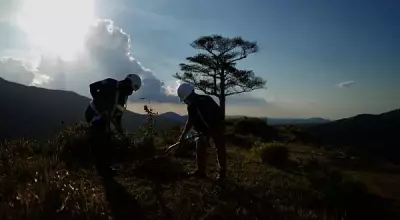
While the Department of Environment and Natural Resources (DENR) issued an Environmental Compliance Certificate and valid permits for tree-cutting and earth-balling covering 617 trees, public opposition has been vocal. Once providing shade and improving air quality, the trees have been reduced to stumps.
Cathleen De Guzman, national coordinator of Kalikasan People's Network for the Environment, condemned Ramon Ang, SMC, and the DENR for enabling destructive infrastructure projects. She accused the agency of serving powerful interests rather than protecting the environment. She also highlighted a double standard where permits are swiftly granted for large corporate interests while environmental defenders are displaced and criminalized.
De Guzman criticized promises of tree replacement as insufficient to justify removing mature trees whose ecological value cannot be immediately replaced. She argued that the real solution to Metro Manila's urban problems lies in creating decent jobs and opportunities in the regions alongside genuine environmental protection.
Climate justice advocates speak out
Ellenor Bartolome of the Philippine Movement for Climate Justice called the issue alarming but unsurprising, pointing to SMC's track record of environmental destruction including coal projects in Bataan, fossil gas in Navotas, reclamation in Bulacan, and the Boracay bridge. She urged the government to stop handing corporations a license to destroy communities and the environment, emphasizing that true progress must not come at the expense of the people.
Karl Orit of Greenpeace Southeast Asia-Philippines called on the government to protect remaining green resources and pass laws holding climate polluters accountable, rather than allowing large corporations and billionaires to destroy the environment.
Under the Revised Forestry Code and Tree Planting and Protection Law, tree cutting or earth-balling may be allowed for infrastructure projects if the proponent secures a valid permit and complies with environmental safeguards.