Cebu Lawmaker Initiates Review of Green Taxi Service Operations
The recent move by Cebu Provincial Board Member Stanley Caminero to seek a comprehensive review of Green and Smart Mobility (GSM) taxi service's compliance with existing regulations has sparked significant discussion about the intersection of environmental policy, transport reform, and political considerations in the province.
Legislative Oversight or Political Pause?
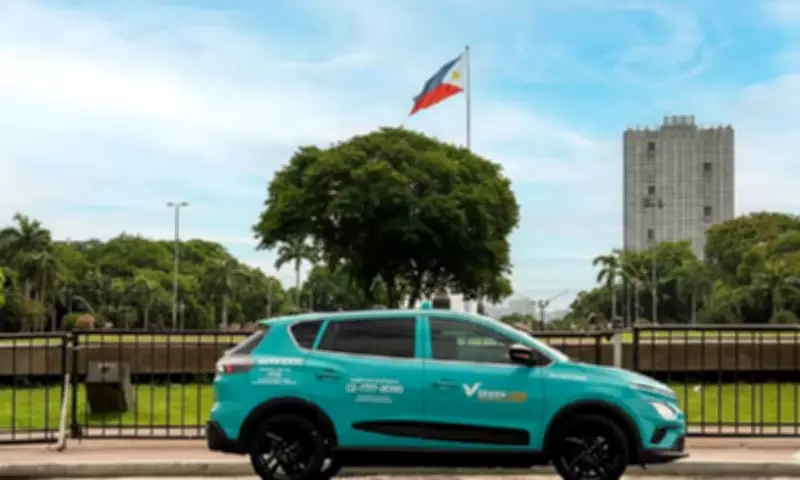
During a Provincial Board meeting held on Monday, February 9, 2026, Caminero formally requested an investigation into the operations of GSM, a Vietnam-based company that recently introduced its electric taxi fleet to Cebu's streets. The lawmaker's action can be interpreted in two distinct ways: as a legitimate exercise of legislative oversight or as a politically convenient pause on an already sensitive transport reform initiative.
Caminero specifically wants to examine whether the company is adhering to local transport plans and national energy laws. He argues that simply adding more vehicles to Cebu's already congested roads does not constitute genuine environmental progress. "The intention of the law was not really to just replace internal combustion vehicles with EVs on the streets, but to prioritize public utility vehicles that are subject to stricter regulation," Caminero explained during the proceedings.

Core Concerns About Transport Policy
The central issue, according to Caminero, revolves around whether these new electric taxis are actually replacing old gasoline-powered vehicles or merely adding to the existing vehicle population. He believes current taxi operators should have been given priority in transitioning to electric vehicles, which would reduce pollution without increasing the total number of cars on Cebu's roads.
"Adding 600 new taxi cabs to Cebu City and the neighboring cities' already clogged roads will only worsen congestion if those units simply augment the existing fleet," Caminero stated. "This exposes a policy failure. The issue is not electrification; it is the absence of a rationalization framework."
Timing and Political Context
The timing of this review request has raised eyebrows among observers, as it comes amid vocal opposition from traditional Cebu taxi operators. This inevitably prompts questions about whether the move represents genuine concern for regulatory compliance or response to political pressure from constituents unsettled by new competition.
In Philippine politics, these motivations often overlap, making the distinction particularly crucial. The decision to allow GSM to operate only on a provisional basis has been defended as prudent governance, but some observers see it as reflecting familiar hesitation rooted more in political calculation than technical incapacity.
Jurisdictional and Implementation Questions
There are also significant jurisdictional considerations at play. Transport franchising remains primarily a national function of the Land Transportation Franchising and Regulatory Board (LTFRB), while local governments typically regulate traffic, terminals, and local ordinances. This creates potential for overlapping authority that could complicate the review process.
What weakens Caminero's initiative, according to some analysts, is not the act of review itself but the lack of clarity regarding its scope and urgency. For oversight to be effective, it must be transparent and evidence-based, illuminating facts rather than prolonging uncertainty. A review that drags on risks becoming a tool of delay rather than accountability.
Balancing Innovation with Protection
It would be unfair to dismiss Caminero's move as purely obstructionist, however. Properly conducted oversight can strengthen public trust and ensure that new transport operators comply with franchising rules, labor standards, and local regulations. If GSM has exceeded its authority, violated labor protections, or failed to meet regulatory conditions, these issues must be addressed promptly.

At the same time, legal compliance should not be weaponized to defend inefficiency. If GSM meets statutory requirements, the conversation should logically shift from legality to policy considerations: determining appropriate operational scales, establishing fair transition frameworks for existing drivers, and creating mechanisms for phasing out older, inefficient vehicles.
The Human Dimension of Transport Reform
The concerns raised by traditional Cebu taxi operators are undoubtedly legitimate. Livelihood displacement represents a real challenge, and any transport transition must be implemented humanely. However, when political fear consistently influences policy direction, reform becomes occasional and reversible rather than systematic and sustainable.
Caminero's review could potentially strengthen public trust if it results in clear findings that either affirm compliance or identify genuine violations. However, if it merely reinforces a climate of hesitation, it risks being seen as another example of how transformation in Cebu is slowed not by lack of ideas but by fear of political fallout.
Toward a Modern Transport System
The public deserves a transport system that is modern, lawful, and consistent—not one perpetually stuck between progress and politics. In the end, the public interest is best served not by endless reviews but by decisive, lawful action that balances environmental goals with economic realities and social equity.
GSM units should ideally be introduced as replacements rather than additions to the existing fleet. Without retiring old, inefficient gasoline-powered taxi cabs, there can be no meaningful achievement in environmental improvement or traffic management. The ultimate test will be whether this review leads to clearer policies or simply extends the uncertainty surrounding Cebu's transport future.