EcoWaste Coalition Exposes Pakistan's Failure to Enforce Global Ban on Mercury-Added Cosmetics
In a stark revelation timed with World Health Day on April 7, the toxics watchdog group EcoWaste Coalition has publicly criticized the Government of Pakistan for its apparent failure to enforce the international ban on mercury-added cosmetics. This action highlights a significant breach of the Minamata Convention on Mercury, which both Pakistan and the Philippines ratified in 2020, setting initial phase-out deadlines for such products.
Persistent Violations of Global Regulations
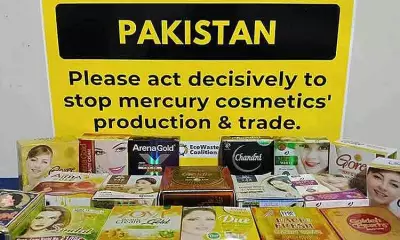
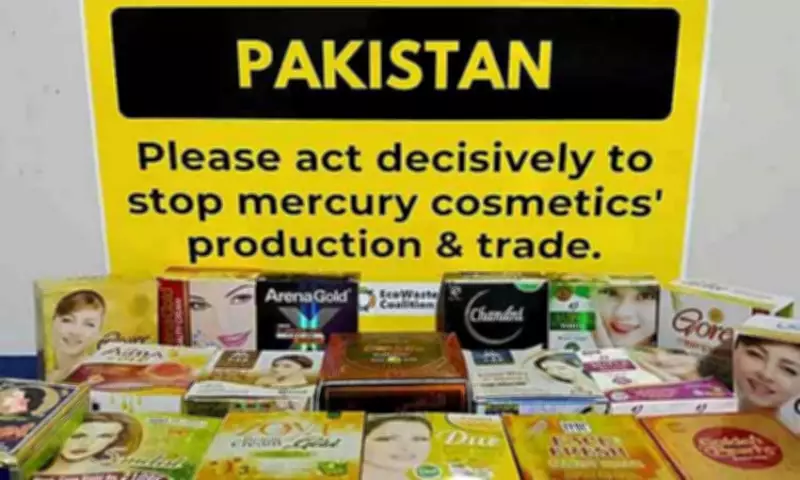
The Minamata Convention originally mandated a 2020 deadline to halt the manufacture, export, and import of mercury-added cosmetics, including skin lightening creams. However, due to evident implementation gaps, this deadline was extended to 2025. Despite this adjustment, the EcoWaste Coalition's recent investigation uncovered alarming violations. From March 1 to 31, 2026, as part of National Women’s Month observances, the coalition purchased 20 skin lightening products from 14 Pakistani cosmetic companies. These items were sourced from online platforms like Lazada and Shopee, as well as beauty stalls in Pasay City, with five marked as "export quality."
Using a handheld Olympus Vanta M Series X-Ray Fluorescence device, analysis revealed that 18 out of the 20 products contained mercury, with levels reaching up to 33,970 parts per million (ppm). Shockingly, 11 of these exceeded 20,000 ppm, far surpassing the 15 ppm limit for hazardous waste. Notably, 13 of the tainted products were manufactured in 2025, two in 2024, and three in 2023, blatantly ignoring both the 2020 and 2025 phase-out deadlines. This includes eight products bearing the Pakistan Standards mark, underscoring systemic failures in regulatory enforcement.

Health Risks and Advocacy Calls
Aileen Lucero, National Coordinator of the EcoWaste Coalition, condemned the ongoing production and trade of these dangerous cosmetics. "The unrelenting manufacture of so-called beauty creams in Pakistan with hidden mercury content is unlawful and unacceptable," she stated. "Exported with impunity and sold in markets, these highly contaminated products pose a serious threat to the health of women and their families, especially young children." The coalition has joined over 20 international health and environmental organizations in urging Pakistan to cease domestic production and global trade of mercury-laced cosmetics.
Feminist advocate Jean Enriquez, Executive Director of the Coalition Against Trafficking in Women – Asia Pacific, emphasized the broader societal implications. "Mercury is purported to hasten skin lightening by inhibiting melanin production, but manufacturers target Filipinas and other women unaware of the long-term health effects," she explained. Enriquez called for resistance against patriarchal and capitalist pressures, advocating for women to embrace their natural skin color and hold companies accountable. "We have to value ourselves as persons equal to men and defy corporate interests that profit from our historical subjugation," she asserted.
Product-Specific Findings and Regulatory Actions
The analysis identified several products with extreme mercury concentrations, including Yaz Beauty Cream Double White + Vitamin C at 33,970 ppm, Arena Gold Beauty Cream at 31,370 ppm, and Goree Day & Night Beauty Cream at 28,640 ppm. Other adulterated items ranged from 75 ppm to 17,580 ppm. Only two products, Face Fresh Cleanser Cream and Glow & Clean Beauty Cream, showed no detectable mercury.
In response, the Food and Drug Administration (FDA) of the Philippines has issued public health warnings for specific variants like Goree Beauty Cream and Golden Pearl Beauty Cream. However, as of April 1, 2026, when the EcoWaste Coalition reported its findings, the FDA has yet to advise on the other contaminated products. This discovery has sparked renewed calls for parties to the Minamata Convention, including Pakistan, to rigorously enforce the ban and for erring companies to face accountability, while promoting a shift away from colorism and towards environmental and health safety.