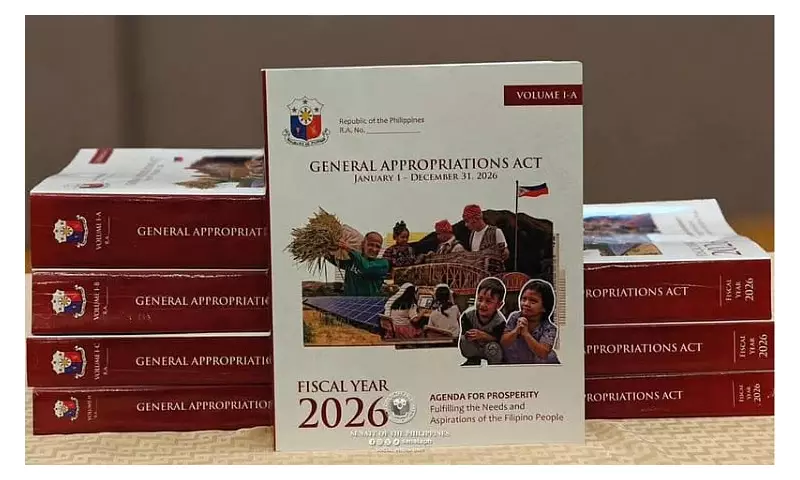
Lawmakers from Davao have mounted a significant opposition to the proposed P6.793-trillion national budget for 2026, casting dissenting votes and raising alarms over persistent corruption, executive branch interference, and opaque budgetary practices. Their objections come despite the bicameral conference committee's signing of the reconciled General Appropriations Bill at the Philippine International Convention Center in Pasay City on Sunday, December 28, 2025, and its subsequent ratification by Congress.
Principle Over Politics: Duterte's Stand Against "Repetition" of Abuse
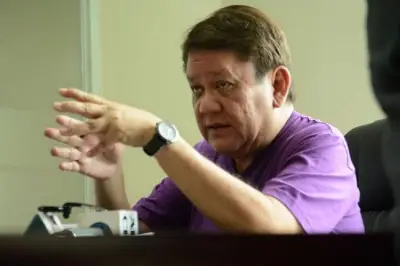
Davao City First District Representative Paolo "Pulong" Duterte delivered a forceful "no" vote, declaring he could not support the spending plan "in good conscience." He anchored his opposition on the unresolved corruption scandals plaguing the 2025 budget, warning that the new fiscal blueprint risks repeating past abuses without genuine accountability.
"The mastermind behind the corruption of the 2025 budget has not even been jailed yet — yet here we are again, with a new budget in 2026 ready to be plundered," Duterte stated. "That is not reform. That is repetition." He emphasized that transparency must be a prerequisite for approval, not a reaction to public outrage, and criticized what he perceives as a disregard for the Filipino public's understanding of governance.

Ungab Flags Executive Interference, Deep Infrastructure Cuts
Fellow Davao representative Isidro Ungab formally opposed the budget, citing unacceptable executive branch intervention during the legislative bicameral process. He specifically called out the presence and influence of the Secretary of the Department of Public Works and Highways (DPWH) in the conference committee, a forum traditionally reserved for lawmakers.
Ungab raised a major red flag over severe reductions in the budget for Foreign-Assisted Projects (FAPs) under the DPWH. He noted the Senate's version slashed the FAPs allocation from P70 billion to a mere P17.7 billion, a drastic 75% cut that threatens to delay critical infrastructure projects. Key casualties include the Metro Manila Subway Project, which lost P24.9 billion, and the North-South Commuter Railway, which saw its funding drop by 62% to P28.8 billion.
Furthermore, Ungab expressed deep skepticism about the Medical Assistance to Indigent Patients (MAIFIP) program, warning it remains vulnerable to politicization and creates a fragmented, bureaucratic nightmare for patients in need. He advocated for strengthening PhilHealth and the Universal Health Care system instead.
Ratification Amidst Reservations and Warnings
Despite the objections from Davao, the P6.793-trillion budget for 2026 was ratified by the Senate on December 29. Senator Win Gatchalian, chair of the Senate Finance Committee, championed the spending plan as people-centered, highlighting its top priority for education with a P1.35 trillion allocation. Significant funding was also earmarked for healthcare and agriculture.
The ratification was not unanimous. Several senators, including Ronald "Bato" dela Rosa, Christopher "Bong" Go, and Imee Marcos, did not sign the bicameral report. Minority senators Rodante Marcoleta and Robinhood Padilla voted against it. Others, like Risa Hontiveros and Francis "Kiko" Pangilinan, voted in favor but "with reservations," the latter questioning the implementation of a P33-billion farm-to-market roads program.
Representative Harold Duterte of the Puwersa ng Pilipinong Pandagat Party-list echoed the critical stance, describing 2025 as a year of revelations and cautioning that the country might be facing its largest corruption scheme. He stated his conscience would not allow a vote in favor of the 2026 budget with so many unanswered questions.
The bill is now set for transmittal to President Ferdinand Marcos Jr., with signing scheduled for January 5, 2026. Until enacted, the government will operate on a reenacted 2025 budget.