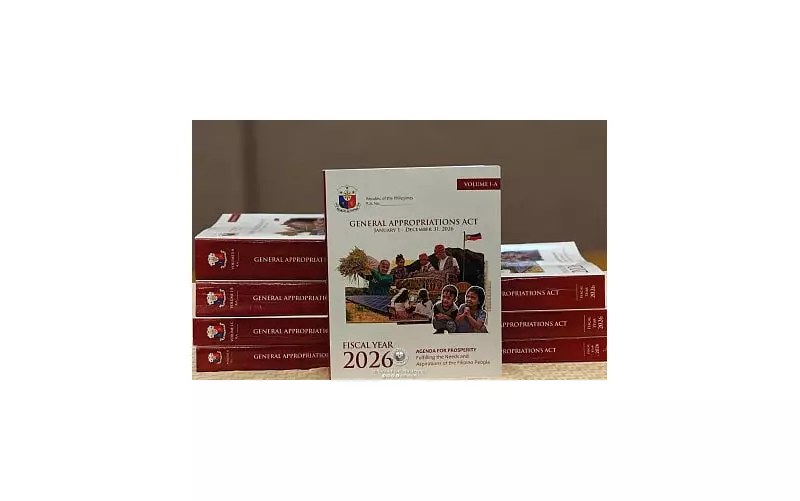
The Philippine Senate has given its final approval to the proposed national spending plan for 2026, a massive PHP6.793-trillion budget that places human development at its core. Senator Sherwin Gatchalian, chairperson of the Committee on Finance, announced the ratification on Monday, December 29, 2025, following the approval of the bicameral conference committee report on House Bill No. 4058.
Historic Investments in Human Development
In his ratification speech, Senator Gatchalian emphasized that the budget's overall direction is firmly anchored on investing in the Filipino people. He identified education, health, and agriculture as the three critical sectors receiving priority funding to drive long-term national and economic growth. "We will see that the funds that we have invested in education, health, and agriculture are big because we believe that these three sectors are very important for the development of our country and for the development of our economy," Gatchalian stated.
Breaking Down the Major Allocations
The education sector remains the single largest investment, receiving a total of PHP1.35 trillion, which is equivalent to 4.4% of the country's gross domestic product. Gatchalian described this allocation as "historic," noting it will fund crucial programs to reduce classroom shortages, expand the School-Based Feeding Program to combat learner malnutrition, and ensure the provision of textbooks.

For the health sector, the budget sees a significant increase to PHP447.6 billion. This includes a PHP129.78-billion allocation for the Philippine Health Insurance Corp. (PhilHealth), marking a 15% increase from the version approved by the House of Representatives. Additional funding is also earmarked for Zero Balance Billing in Department of Health hospitals and for the country's specialty hospitals.
In agriculture, the proposed budget of PHP214.39 billion represents the highest allocation for the sector in over a decade. This substantial funding is intended to directly support farm incomes and strengthen the nation's food security.
Safeguards and Next Steps
Gatchalian also highlighted that the bicameral conference committee incorporated several transparency measures to protect public funds. These include livestreamed deliberations, public access to budget documents, and a new requirement for infrastructure projects to display station numbers and geographic coordinates to allow for on-the-ground verification.
With the Senate's ratification, the 2026 General Appropriations Bill is now cleared for transmittal to Malacañang. It awaits the signature of President Ferdinand R. Marcos Jr. to become law and take effect at the start of the next fiscal year.