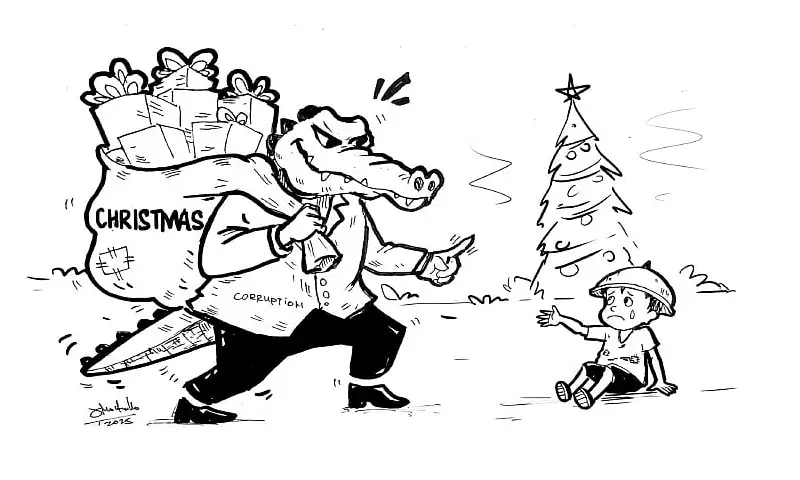
The familiar glow of parols and the scent of bibingka fill the air, while jeepneys adorned with cellophane stars navigate flooded streets. Inside churches, choirs sing "O Holy Night," and the timeless story of a child born in a manger, first seen by laborers and travelers, is retold. This season, which has always centered on the humble, gives sharp resonance to a powerful message from Pope Francis: "corruption is paid by the poor." In a nation where Christmas is deeply cherished, this indictment strikes a profound chord. If the Nativity narrative begins with a baby laid in a feeding trough, then every peso stolen from public coffers meant for schools, health centers, and drainage systems is more than mismanagement—it is a direct betrayal of the season's core message of hope and dignity for the least.
The Daily Cost of Graft in Filipino Communities
Look beyond the festive lights to the realities of everyday life. A barangay health worker attends Simbang Gabi but must return to an overcrowded clinic lacking essential medicines. A teacher, taking down the final classroom parol, faces the empty shelf where new textbooks were promised but never arrived. A traffic enforcer directs cars through a perennial flood, quipping, "It's Christmas, sir, but the flood remains," while gesturing to a drain left broken for over a year. These are not mere anecdotes; they are the lived Christmas experience for many, illustrating in stark detail how the poor bear the brunt when public funds are padded, diverted, or lost to ghost projects. The bill comes due as a tricycle tire blown out by an unrepaired pothole on Christmas Eve, or a mother forced to purchase antibiotics from a private pharmacy because the public health center has run out.
Shame and the Call for Conscience
Amid the celebrations, a hard truth persists. There is rightful shame for those who plunder resources meant for schools, hospitals, and farm-to-market roads. Shame, too, for those who publicly decry corruption yet secretly approve inflated contracts. To the politicians who hoard pork barrel funds, the contractors who use substandard materials, and the officials who disguise greed with empty slogans—may the faces of children wading through floods or mothers turned away from empty pharmacies weigh on your conscience this Christmas. No belen or carol can conceal such moral decay. To rob the impoverished while preaching reform is not merely corruption; it is a profound betrayal.

The Quiet Acts of Service That Define the Season
Yet, the true heart of Christmas persists in humble, determined acts of service. Students in a coastal school, their new books delayed, carefully wrap worn-out textbooks with manila paper and parol cutouts. In proactive barangays, residents publicly post project costs and timelines on community boards. In classrooms near rivers, students diligently track rainfall data against visible cracks in dikes, creating their own records to advocate for repairs. These are not grand gestures, but they embody the Christmas spirit: to serve first. They also make corruption more difficult to hide, as genuine service casts light into the shadows where graft thrives.
Some may cynically claim "everyone is corrupt," but the story of Christmas—or Noel—invites a better response. It is a tale not of perfect people, but of ordinary individuals who said "yes" to risky, humble tasks: a carpenter offering a stable, laborers following a star, parents keeping a newborn warm with their meager means. Today, this spirit lives in families who send GCash for a classmate who cannot afford an exchange gift, or in district engineers who transparently post project blueprints. These small, faithful "yeses" are how we celebrate with integrity.

While some argue Christmas should be free from politics, corruption is not an abstract concept. It has a daily human cost. Ask the dialysis patient told to buy her own IV cannula days before the holiday. Ask the vendor whose goods are ruined by floodwater because a drainage project was abandoned. Ask the father who wakes at 3 a.m. to print learning modules due to a perpetually slow school internet connection. These stories are not calls for blind rage, but for sustained vigilance. If Christmas truly belongs to the least among us, then we must notice—and name—the thefts, large and small, that make their December heavier.
Our celebrations also reveal our values. A lavish party is not wrong in itself; it becomes so when it forgets the workers who made it possible. Transparency and fairness within our own circles—be it a business owner ensuring just bonuses and timely pay for small suppliers, or an institution publishing its procurement schedules—build pride and community. Warmth and accountability can, and must, coexist. Teachers witness the long-term cost of graft most acutely: a child missing school due to preventable floods loses not just lessons, but confidence; a science lab without reagents turns curiosity into guesswork.
Ultimately, Christmas has never been about slogans. It is about presence, honesty, and service. Public budgets and projects should reflect this through receipts open to scrutiny, contracts completed before ceremonial ribbon-cuttings, and robust protection for whistleblowers. This is not mere idealism; it is basic respect for families who saved for weeks to afford their spaghetti and hamon. A gift's meaning deepens when the ground beneath the Christmas tree stays dry because a culvert was built with the right materials. The season's message is not that hardship vanishes, but that human dignity remains intact when no one steals from the poorest.
So let the parols shine and the tables fill with laughter and shared stories. Let there be generosity for the neighbor in need. But let this also be the year we stop accepting padded contracts as "normal" and start recognizing honest work as the greatest gift. If the season means what we proclaim, then feasting on stolen resources is no celebration. The truer, brighter feast is simpler: rivers contained within their banks, clinics fully stocked, and classrooms dry after the rain. That is the look of a Christmas where the bill for corruption no longer lands, yet again, at the door of the poor.