The Supreme Court of the Philippines has reinstated an administrative penalty against a former municipal mayor for authorizing the extraction of limestone without the necessary permits. This ruling overturns a previous Court of Appeals decision that had absolved the official based on his claimed good intentions.
The Core Legal Dispute and Violation
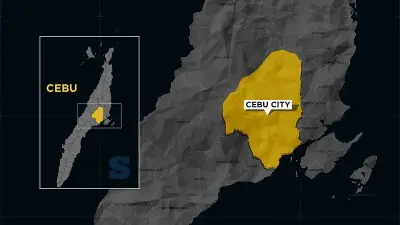
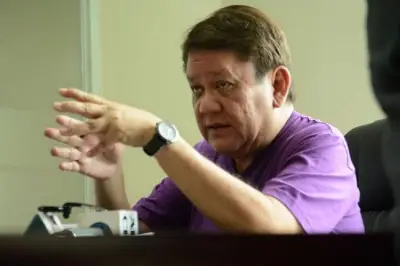
The case centers on former Consolacion, Cebu mayor Avelino J. Gungob Sr., who served from 2001 to 2010. The controversy began in November 2009 when authorities intercepted three dump trucks, a backhoe, and a bulldozer carrying limestone at a checkpoint in Consolacion.
Investigations revealed that while the heavy equipment belonged to the Municipal Government, the vehicles were transporting quarry materials without the valid permits mandated by the Philippine Mining Act of 1995. Following complaints from the National Bureau of Investigation, the Office of the Ombudsman found Gungob liable for simple misconduct and ordered a three-month suspension without pay, which could be converted into a fine.

Supreme Court Overturns Appeals Court Ruling
Gungob challenged the penalty before the Court of Appeals, which later cleared him of liability. The CA accepted his defense of "good faith," noting his argument that the limestone was intended solely for genuine municipal projects and that requests to renew the municipality's permits were already pending.
However, the Supreme Court firmly rejected this reasoning in a decision promulgated on August 13, 2025. The High Court reversed the CA's ruling, emphasizing that the act of extracting minerals without a permit is unlawful by its very nature.
"The CA’s position that the respondent may be totally absolved on account of his good faith... is not right," the SC stated in its ruling.
Defining Simple Misconduct and Its Consequences
The Supreme Court provided a crucial clarification on the definition of simple misconduct. It ruled that administrative liability for this offense does not require proof of corruption, malice, or bad faith. It only requires evidence that a public officer violated a law or regulation.
"Good faith is not anathema to a finding of liability for simple misconduct," the court added, explaining that while good faith might explain motive, it does not erase the violation itself.
This landmark decision reinforces the strict requirement for all government officials to follow legal procedures meticulously, even when pursuing public works projects. It establishes that the "public purpose" of a project cannot be used as a defense to bypass environmental regulations and permitting processes.
As a result, the original penalty imposed by the Ombudsman against former Mayor Gungob stands. He must now serve the three-month suspension without pay or pay its equivalent fine.