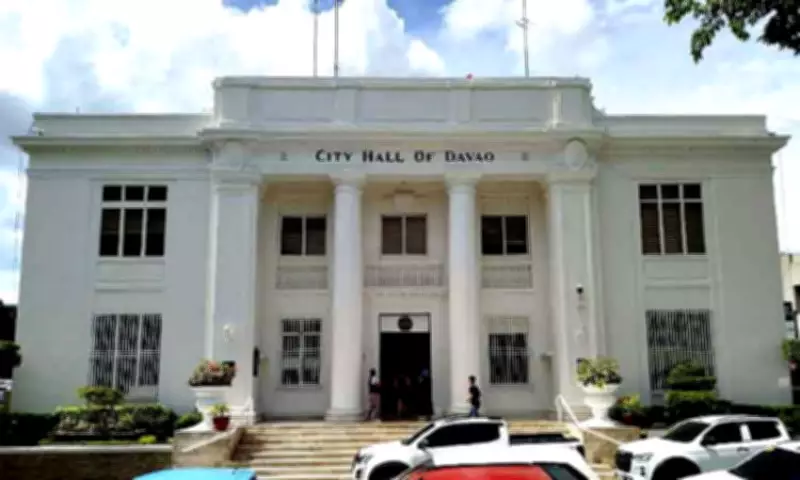
Davao City Hall Undergoes Historic Restoration as City Implements Energy-Saving Four-Day Workweek
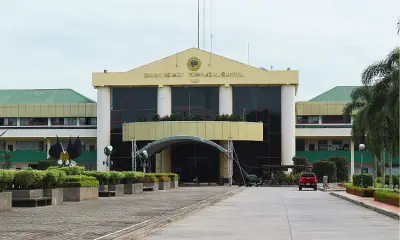
In a dual announcement that blends heritage preservation with modern governance, Davao City has launched two significant initiatives. The iconic Davao City Hall is currently undergoing a meticulous repainting of its façade, returning it to its original pristine white finish. This restoration honors the building's neoclassical architectural design, which was first introduced in 1926. The transformation is a key part of the city government's preparations for the upcoming Araw ng Davao celebration and the building's monumental 100th anniversary this year.
The repainting work is actively in progress on the façade, with the remainder of the structure scheduled to follow in the coming days. This effort aims to revitalize the landmark, ensuring it stands as a proud symbol of Davao's rich history and cultural identity.
Four-Day Workweek Implemented to Combat Rising Energy Costs
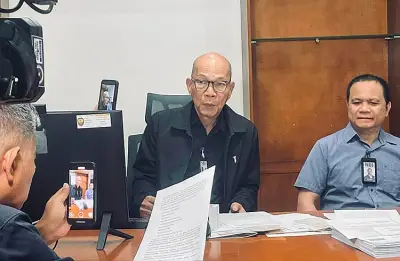
Simultaneously, the City Government of Davao has announced the implementation of a four-day workweek as a strategic measure to conserve energy. This decision comes in response to escalating fuel costs, which are directly linked to the ongoing conflict in the Middle East. In an official statement dated April 15, 2026, the local government outlined that offices may adopt a work-from-home setup every Friday starting April 17, provided that job duties can be effectively performed remotely.

Regular office hours will be maintained from Monday to Thursday, from 8 a.m. to 5 p.m. However, the city has emphasized that departments delivering frontline and essential services must retain on-site personnel to guarantee uninterrupted public service. Offices excluded from this arrangement include those providing health and medical services, emergency response, disaster risk reduction and management, public safety and security, traffic management, and other units requiring daily on-site operations, such as those handling document processing.
Alignment with National Directive and Energy-Saving Measures
This move aligns with a directive from President Ferdinand Marcos Jr., who earlier ordered the temporary adoption of a four-day workweek in the executive branch starting March 9 to reduce energy consumption. President Marcos stated, "Para naman sa bahagi ng pamahalaan: Simula sa Lunes, ika-9 ng Marso, pansamantala nating ipapatupad ang four-day workweek sa ilang tanggapan ng ehekutibo (Starting Monday, March 9, we will temporarily implement a four-day workweek in some executive offices)."
The directive was formalized through Memorandum Circular No. 114, which applies to national government agencies, government-owned or -controlled corporations, local government units, state universities and colleges, and other government institutions. Under this circular, agencies are mandated to continue delivering essential and emergency services while enforcing comprehensive energy-saving measures. These measures include:
- Setting air conditioning systems to 24 degrees Celsius.
- Limiting the use of non-essential lights and equipment.
- Placing electronic devices on sleep mode when not in use.
Together, these initiatives reflect Davao City's commitment to preserving its historical legacy while proactively addressing contemporary challenges like energy efficiency and cost management in the face of global economic pressures.