
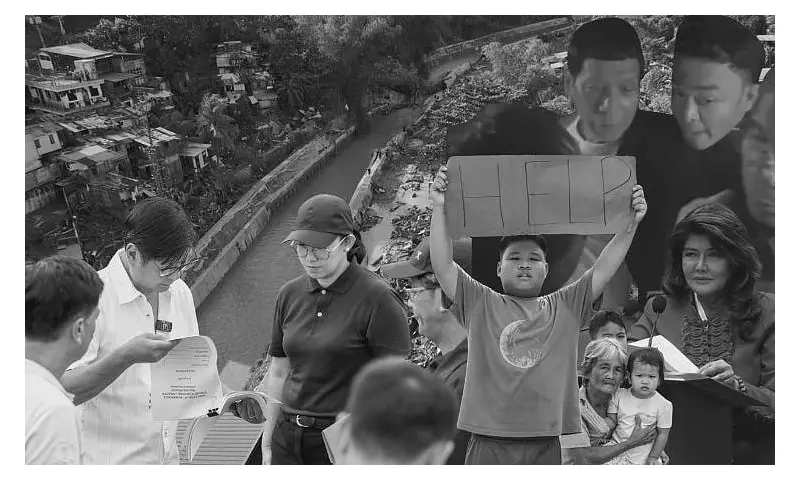
As the year 2025 draws to a close, the Philippines reflects on a period of intense transformation and turmoil. The past twelve months have been defined by seismic political shifts, high-stakes legal battles, institutional reforms, and catastrophic natural events that have collectively tested the nation's resilience. Five major stories have dominated the headlines, each leaving a deep imprint on the country's governance, justice system, public trust, and climate preparedness.
Historic Arrest of a Former President
In an unprecedented event on March 11, 2025, former President Rodrigo Duterte was arrested by Philippine authorities upon his arrival at Ninoy Aquino International Airport. The arrest was executed under a warrant from the International Criminal Court (ICC), which is investigating alleged crimes against humanity linked to his administration's war on drugs.
The ICC's Pre-Trial Chamber determined there were reasonable grounds to believe Duterte was responsible as an indirect co-perpetrator for murders occurring between November 1, 2011, and March 16, 2019. This period covers his tenure as both Davao City mayor and Philippine president. He was swiftly transferred to the ICC Detention Centre in Scheveningen, Netherlands, at government expense, and made his initial court appearance on March 14.

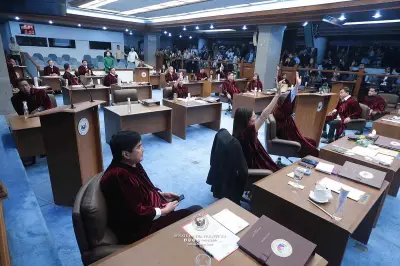
The arrest ignited fierce national debate. President Ferdinand Marcos Jr. defended the move as fulfilling international obligations, while Duterte's allies challenged the ICC's jurisdiction. Senator Imee Marcos, the President's sister but a Duterte ally, launched a Senate probe, calling the arrest illegal. The Senate Committee on Foreign Relations later recommended charges against several officials, including Justice Secretary Jesus Crispin Remulla, for the turnover.
In November 2025, the ICC Appeals Chamber rejected Duterte's appeal for provisional release, citing flight risk and potential witness interference. Medical experts assessed that while physically frail at 80, he remains mentally fit to stand trial.
Billions Lost in Flood Control Scandal
Following devastating floods exacerbated by the habagat and a series of typhoons, President Marcos ordered a deep investigation into flood control project irregularities during his SONA. Congressional probes uncovered massive corruption, with Senate Pro-tempore Panfilo Lacson revealing the government lost over P180 billion to "ghost" projects alone, with more than 600 out of 10,000 projects found to be non-existent.
Public outrage led to mass protests demanding accountability. The DPWH recommended graft charges against 87 individuals, including high-profile names such as former House Speaker Martin Romualdez, former Ako Bicol representative Elizalde "Zaldy" Co, former DPWH secretary Manuel Bonoan, and Senators Jinggoy Estrada and Joel Villanueva.
Co, now a fugitive, released video statements accusing Romualdez and President Marcos of receiving kickbacks. The Anti-Money Laundering Council has frozen assets worth an estimated P20.3 billion, including thousands of bank accounts and properties. In a tragic turn, former DPWH undersecretary Catalina Cabral, a key figure in the scandal, was found dead on December 18 in Benguet after an apparent fall.
Sweeping Changes in the Marcos Cabinet
In May 2025, disappointed by his coalition's performance in the midterm polls, President Marcos initiated a major government overhaul. He demanded courtesy resignations from his Cabinet and senior appointees to conduct a performance review aimed at "renewed alignment and faster execution."
Notable departures included Solicitor General Menardo Guevarra, CHED Chair Prospero de Vera III, and DENR Secretary Maria Antonia Yulo-Loyzaga. While the core economic team was retained, the flood control scandal triggered further resignations later in the year. DPWH Secretary Manuel Bonoan resigned and was replaced by former transportation chief Vince Dizon. Budget Secretary Amenah Pangandaman and Executive Secretary Lucas Bersamin also stepped down in November following their implication in the anomalies.

The Philippine National Police also saw leadership changes. Police General Nicolas Torre III, who led Duterte's arrest, was appointed PNP chief in June but was relieved in August. He was later appointed MMDA general manager in December.
A Political Feud Erupts Within the First Family
On November 17, during an Iglesia ni Cristo rally, Senator Imee Marcos stunned the nation by publicly accusing her brother, President Marcos, and First Lady Liza Araneta-Marcos of being drug addicts. She claimed the President had used cocaine and marijuana for years, that it worsened after his marriage, and that his name appeared on a drug list in 2016.
She further alleged that the President's children, including Ilocos Norte Rep. Sandro Marcos, also used illegal drugs. Malacañang dismissed the claims as baseless and politically motivated, citing the President's negative drug tests before the 2021 campaign. President Marcos responded by saying the person making the accusations "is not my sister," expressing concern for her condition. The public feud highlighted deep fractures within the country's most powerful political family.
Climate Disasters Expose National Vulnerability
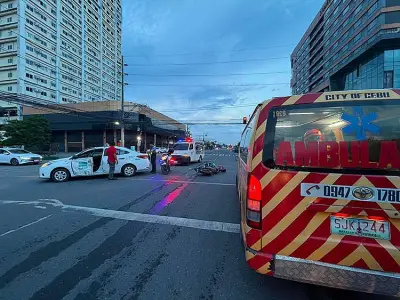
The Philippines' exposure to extreme weather was brutally underscored in 2025. Typhoon Kalmaegi (Tino) in November caused catastrophic flooding, with the death toll surpassing 260 people. Cebu province was hardest hit, suffering just over a month after a magnitude 6.9 earthquake killed 79 people near Bogo City in October.
Earlier in October, a twin earthquake offshore Manay City, Davao Oriental, with magnitudes of 7.4 and 6.8, claimed eight lives. The subsequent Super Typhoon Fung-wong (Uwan) displaced millions more, compounding the humanitarian crisis. These successive disasters tested the limits of national disaster preparedness and highlighted urgent needs in climate adaptation and resilient infrastructure.
From the historic legal pursuit of a former president to the uncovering of a multi-billion-peso infrastructure scam, from a reshuffled government to a very public family rift and nature's fury, 2025 has been a year of profound reckoning for the Philippines. These events collectively paint a picture of a nation grappling with foundational questions of accountability, governance, and survival in an era of political and climatic upheaval. The lessons learned this year will undoubtedly influence the nation's trajectory as it moves into 2026.