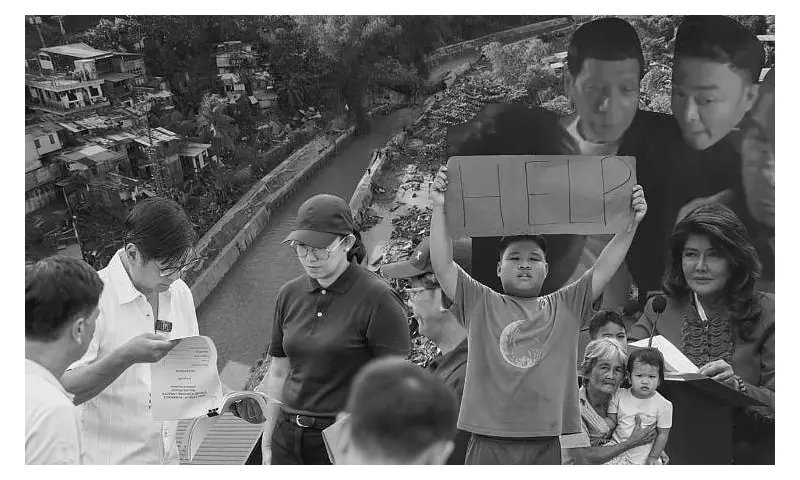
As the calendar turns to 2026, the Philippines reflects on a year of seismic shifts that tested its institutions, reshaped its political landscape, and exposed deep vulnerabilities. The year 2025 will be remembered for historic legal actions, sprawling corruption scandals, dramatic government overhauls, and nature's relentless fury.
A Historic Arrest and Its Political Shockwaves
The most defining moment came on March 11, 2025, when former President Rodrigo Duterte was arrested at Ninoy Aquino International Airport. The arrest was executed under a warrant from the International Criminal Court (ICC), which seeks to try him as an "indirect co-perpetrator" for alleged crimes against humanity linked to his war on drugs from 2011 to 2019.
Duterte was swiftly transferred to the ICC Detention Centre in The Hague, Netherlands, making his first court appearance on March 14. This marked the first time a former Philippine head of state faced an international tribunal. The event ignited fierce national debate over sovereignty versus accountability.

President Ferdinand Marcos Jr.'s administration defended the move as fulfilling international obligations. However, the arrest fractured political alliances. Senator Imee Marcos, the President's sister but a Duterte ally, launched a Senate investigation, calling the arrest illegal. Her committee recommended filing charges against officials like Justice Secretary Jesus Crispin Remulla for the turnover "without due process."
In November, the ICC Appeals Chamber rejected Duterte's appeal for provisional release, citing risks of flight and witness interference. Medical experts, while noting his frailty at age 80, ruled he was fit to stand trial, understanding the charges and proceedings against him.
Unearthing a Multi-Billion Peso Flood Control Scandal
Massive flooding during the 2025 habagat and typhoon season exposed more than just weak infrastructure; it revealed a web of corruption. In his State of the Nation Address, President Marcos ordered a deep probe into flood control project irregularities.
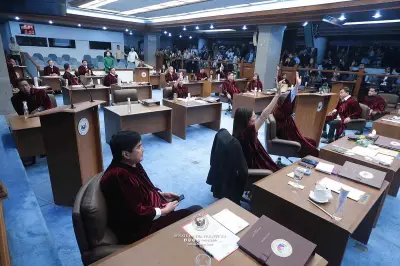
Congressional investigations uncovered staggering losses. Senate Blue Ribbon Committee chair Panfilo Lacson revealed the government lost over P180 billion to "ghost" projects alone, with over 600 of 10,000 projects being non-existent. A former DPWH engineer presented photos of cash stacks being divided as kickbacks.
The scandal led to widespread protests and an executive order creating an Independent Commission for Infrastructure. By December 20, the DPWH recommended graft charges against 87 individuals, including high-profile names:
- Former House Speaker Martin Romualdez (the President's cousin)
- Former Ako Bicol Rep. Elizalde "Zaldy" Co
- Former DPWH secretary Manuel Bonoan
- Senators Jinggoy Estrada and Joel Villanueva
- Former senator Ramon "Bong" Revilla
Co, now a fugitive abroad, accused Romualdez and President Marcos of receiving kickbacks. The Anti-Money Laundering Council froze assets worth P20.3 billion linked to the scam. The scandal took a dark turn on December 18, when former DPWH undersecretary Catalina Cabral, a key figure, was found dead after a fall in Benguet.
Government Shakeup and a Startling Family Accusation
Disappointed by his coalition's performance in the May midterm polls, President Marcos initiated a sweeping Cabinet revamp in May 2025. He demanded courtesy resignations for a "results-first" realignment. Key departures included Solicitor General Menardo Guevarra and DENR Secretary Maria Antonia Yulo-Loyzaga.
His core economic team was retained, but the flood probe later forced the resignations of Budget Secretary Amenah Pangandaman and Executive Secretary Lucas Bersamin in November. The PNP also saw turbulence; General Nicolas Torre III, who led Duterte's arrest, was appointed chief in June only to be relieved in August. He was later appointed MMDA general manager in December.

The year's most shocking political drama came from within the First Family. On November 17, at an Iglesia ni Cristo rally, Senator Imee Marcos publicly accused her brother, the President, and First Lady Liza Araneta-Marcos of being long-time drug addicts, claiming use of cocaine and marijuana. She also implicated the President's son, Rep. Sandro Marcos.
Malacañang dismissed the claims as baseless and politically motivated, noting the President's negative drug tests before the 2021 campaign. President Marcos responded sadly, saying the person on TV "is not my sister," expressing concern for her condition. Rep. Sandro Marcos called the claims false and irresponsible.
Climate Disasters Test National Resilience
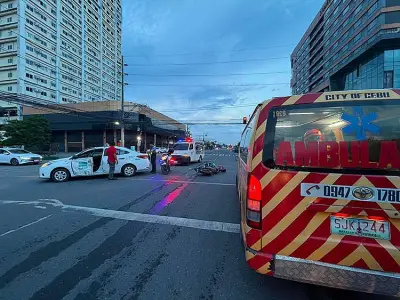
The Philippines' vulnerability was brutally highlighted by a series of climate disasters. Typhoon Kalmaegi (Tino) in November caused catastrophic flooding, killing over 260 people, with Cebu, Negros Occidental, and Negros Oriental hardest hit. This came just a month after a magnitude 6.9 earthquake off Bogo City, Cebu, killed 79.
October also saw a twin earthquake offshore Manay City, Davao Oriental, claiming eight lives. The relentless sequence continued with Super Typhoon Fung-wong (Uwan), which displaced millions and caused extensive property damage, further straining disaster response and highlighting urgent needs in climate adaptation and resilient infrastructure.
From the halls of international justice in The Hague to the flooded streets of Cebu, from the Senate hearing rooms uncovering corruption to the public rift in the country's most powerful family, 2025 was a year of profound reckoning for the Philippines. These events collectively underscore a nation grappling with accountability, governance reform, institutional integrity, and an escalating climate crisis. The lessons of this tumultuous year will undoubtedly shape the nation's path forward into 2026 and beyond.