Cebu City Grapples with Waste Disposal Crisis as Landfill Access Restricted
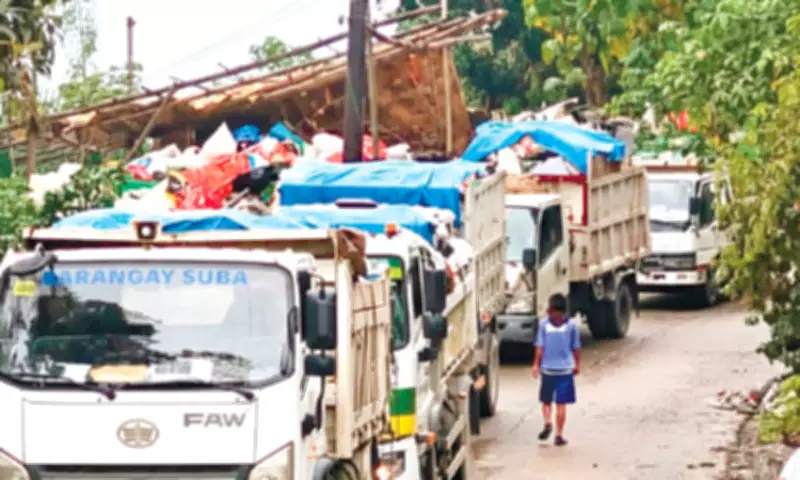
Garbage trucks operated by the Cebu City Government and several barangays were prevented from entering the Asean landfill in Barangay Polog, Consolacion, on two separate occasions last month. This incident underscores the escalating challenges in the city's waste management system, which has been strained since the closure of the Binaliw landfill earlier this year.
New Collection System Implemented Amid Disposal Shortages
The shutdown of the Binaliw landfill has compelled the City to adopt an "interval-based" hauling system, effectively rationing disposal slots. This has resulted in neighborhoods adhering to a rotating schedule, with stricter segregation rules enforced to manage the reduced capacity. Residents are now adjusting to a reality where daily garbage truck visits are a thing of the past, highlighting a broader infrastructure strain that extends beyond mere scheduling adjustments.
Under this interim system, collection trucks operate on a rotating basis, typically on Monday-Wednesday-Friday or Tuesday-Thursday-Saturday cycles, with specific guidelines for different areas:

- Upland barangays: Collection is limited to twice weekly, requiring residents to handle biodegradable waste on their own properties.
- Urban barangays: Trucks collect waste on designated days but often experience "standby" periods. Once full, a truck must await its turn to dump at the landfill before resuming collection routes.
To alleviate the load, the City has intensified segregation at the source, mandating the separation of recyclables like plastic bottles prior to collection. Additionally, segregation areas at the Carbon Market have been activated, with more materials recovery facilities (MRFs) being prepared to filter waste before it reaches collection vehicles.
Root Causes: A Mathematical and Logistical Dilemma
For many communities, irregular service is not a novel issue. Even before the official rollout of the interval-based system, daily collection had ceased in numerous barangays. In the south district, areas such as Barangay Bulacao had already transitioned to weekly schedules due to the logistical hurdles and distance involved in transporting waste to the now-closed Binaliw landfill.
The core of the slowdown lies in a mathematical imbalance: Cebu City generates more trash than it is currently permitted to dispose of. Following the collapse and closure of the Binaliw landfill on January 8, waste has been diverted to a private facility in Consolacion. However, this alternative does not offer a one-to-one replacement. While the city produces roughly 350 to 400 tons of waste daily—down from 500 tons due to reduction efforts—Consolacion Mayor Teresa Alegado has capped the disposal allowance at 100 to 150 tons per day.
This bottleneck triggers a chain reaction: when the daily limit is reached, trucks cannot unload their contents. If trucks cannot empty their loads, they are unable to collect new garbage the following morning. This leads to the "standby" delays described by Cebu City Mayor Nestor Archival, where loaded trucks remain idle until the next disposal window becomes available.
Infrastructure Vulnerabilities and Public Health Concerns
The crisis exposes the fragility of the city's waste infrastructure, which relies heavily on road conditions and external partnerships. Logistics are further complicated by the route to the Consolacion facility, which is susceptible to congestion and deterioration. Heavy rains in early February rendered parts of the access road hazardous, forcing cancellations of scheduled hauling for barangays like San Nicolas Proper.
This unpredictability poses significant public health risks. Barangay captains report that missed collection windows result in rapid waste accumulation. In densely populated neighborhoods, even a single-day delay can lead to piles of uncollected refuse, raising alarms about sanitation and odor issues.

Questions Linger Over Binaliw Landfill's Future
As officials navigate the logistics of the interval system, questions persist regarding the long-term status of the Binaliw landfill. Councilor Joel Garganera has expressed concerns about Mayor Nestor Archival's stance on the closed facility, suggesting the mayor may be anticipating a return to the site.
In an interview with SunStar's Beyond the Headlines on February 10, 2026, Garganera noted that Archival mentioned the existence of "three remaining hectares" at the facility just days after the January 8 trash slide, even as search and rescue operations were ongoing. Garganera emphasized that reopening any part of the Binaliw landfill should not be considered until safety assessments are completed and investigation findings are made public, ensuring accountability and justice for victims.
What Lies Ahead: Critical Deadlines and Monitoring Points
The current arrangement with the Consolacion landfill is temporary and set to conclude in March, imposing a hard deadline for the City to secure a new disposal site or negotiate a substantial extension. Key developments to watch include:
- The progress of road repairs along the Pit-os to Consolacion route, which officials are expediting to create alternative access for heavy trucks.
- The effectiveness of the new MRFs at Bagsakan in reducing waste volume to fit within strict disposal caps.
The central question remains: if the Consolacion agreement ends in March without a fully operational replacement for Binaliw, where will the city's 400 tons of daily refuse be directed? This looming uncertainty underscores the urgent need for sustainable solutions in Cebu City's waste management strategy.