The Alex Eala Effect: Transforming Philippine Sports Culture
As a lifelong sports enthusiast, I have witnessed numerous shifts in the Filipino athletic landscape. There was a time when my professional path almost led me to sports journalism, thanks to a bold proposal from a friend, former sports editor Jobannie Tabada. He approached me inside the newsroom, likely with our editor-in-chief Pachico A. Seares's blessing, to take over the SunStar Cebu sports desk as he prepared for a move to the United Arab Emirates. Despite the intriguing offer, I declined, feeling more at home covering political developments—a passion that guided my college shift from chemical engineering to political science.
A New Era for Filipino Sports Fans
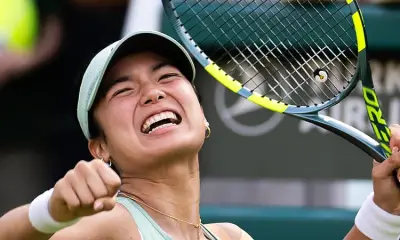
This personal reflection underscores a broader truth: change is indeed the only constant. In the Philippines, this is vividly evident as sports fans increasingly pivot from traditional favorites like boxing and basketball to tennis. The catalyst for this transformation is none other than Alexandra Eala, whose rise in global women's tennis has ignited a nationwide passion for the sport.
Until recently, tennis courts in the country were often neglected spaces. In many subdivisions, developers built dual-purpose courts meant to attract both basketball and tennis enthusiasts, a practical but often ineffective strategy. Tennis, with its requirements for rackets, nets, balls, and even ball boys, proved challenging to sustain, leading to underuse. However, Eala's success has reversed this trend, creating what is now widely known as the Alex Eala effect.

Tennis Courts Come Alive
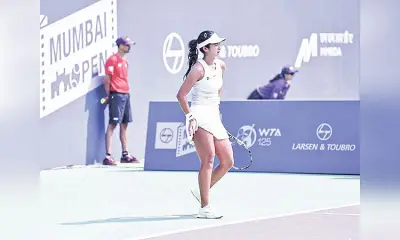
Alex Eala takes pride in seeing tennis courts across the Philippines fill up with eager players. This resurgence culminated in a historic milestone: the country hosted its first international tennis event, the Philippine Women's Open, a Women's Tennis Association (WTA) 125 tournament. This achievement marks the Philippines' entry into a global arena long dominated by Europeans and Americans, signaling a new chapter in its sports history.
As a basketball fan who admires stars like Caitlin Clark, I have also long appreciated tennis, drawn to legends such as Jimmy Connors, Chris Evert, Martina Navratilova, the Williams sisters, Roger Federer, Pete Sampras, and Rafael Nadal. Now, a Filipina—Alex Eala—joins this prestigious list, capturing headlines and inspiring a new generation.
Shifting Fan Dynamics
In years past, Manny Pacquiao's fights commanded my unwavering attention, whether at home, out with friends, or even during significant personal moments. The collective roar of fans with every punch was a cultural phenomenon. While I haven't yet reached that level of fanaticism for Eala's matches, I am cheering her on, reflecting a gradual but palpable shift in the nation's sports allegiances.
This evolution highlights how individual achievements can reshape national interests, turning neglected courts into hubs of activity and placing the Philippines on the international tennis map.