DA Fine-Tunes Policies to Balance Rice and Onion Prices for Farmers and Consumers
The Department of Agriculture (DA) has assured the public that it is continuously fine-tuning policies to maintain a delicate balance between affordable agricultural goods for consumers and reasonable profitability for Filipino farmers. This effort comes in response to recent spikes in the prices of rice and onions, which have strained household budgets and farm incomes alike.
Striking a Balance in the Market
DA Secretary Francisco Tiu Laurel Jr. emphasized the government's commitment to stabilizing the market through active management. "Our goal is to strike a balance to ensure farmers recover their costs, while consumers can access rice and onions at reasonable prices," he stated in a recent announcement. This dual focus aims to support both ends of the supply chain, preventing undue hardship for either group.
Accelerating the PHP20 per kg. Rice Program
To address rice supply pressures, the DA is accelerating the nationwide expansion of the PHP20 per kilogram rice program under the "Benteng Bigas, Meron (BBM) Na" initiative. Secretary Tiu Laurel described this as a critical measure to balance production costs with consumer affordability. The program benefits consumers by offering affordable prices and supports local rice producers through direct palay procurement under the National Food Authority (NFA).

Current Rice Price Trends
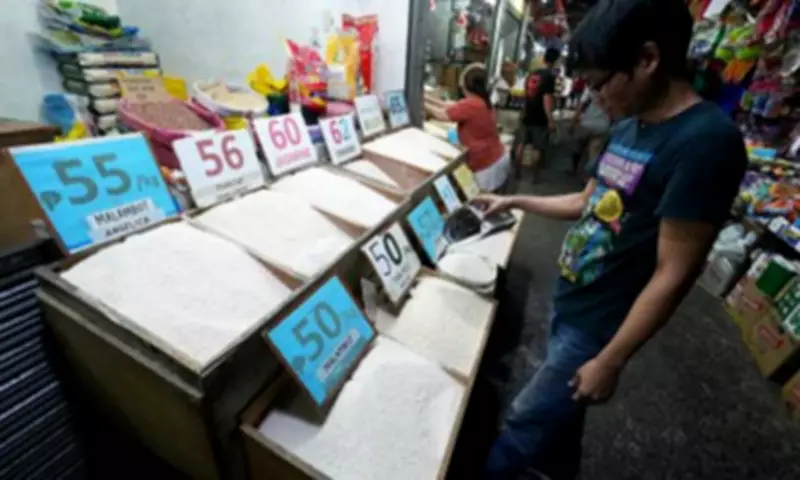
According to the DA Bantay Presyo (Price Watch), as of Thursday, premium imported rice in Metro Manila sells from PHP52 to PHP62 per kilogram. Imported well-milled rice ranges from PHP43 to PHP49 per kilogram, while imported regular-milled rice is priced between PHP36 and PHP46 per kilogram. Local premium rice is available at PHP43 to PHP60 per kilogram, with well-milled and regular milled rice prevailing at PHP45 and PHP40 per kilogram, respectively.
Factors Behind Price Hikes
Market analysts attribute recent rice price increases to supply fluctuations and logistical challenges, particularly due to delays in import arrivals last January. However, Secretary Tiu Laurel projects that rice prices will be tamed by mid-March, coinciding with the onset of the local palay harvest season and the arrival of imported rice shipments.
Onion Market Dynamics
In the onion sector, farmers in Nueva Ecija have reported that imported onions are influencing low farmgate prices for local produce. Despite this, inspections of cold storage facilities have revealed limited stocks of imported onions, suggesting that other market factors may be at play. The DA is currently evaluating policy measures to lift onion farmgate prices before local production peaks in March and April.
Ensuring Future Stability
Secretary Tiu Laurel highlighted that careful monitoring and timely interventions will be key in ensuring that both farmers and consumers benefit in the coming weeks. By fine-tuning policies and responding proactively to market signals, the DA aims to foster a more stable and equitable agricultural landscape. This approach underscores the government's dedication to maintaining food security and economic fairness in the face of ongoing challenges.