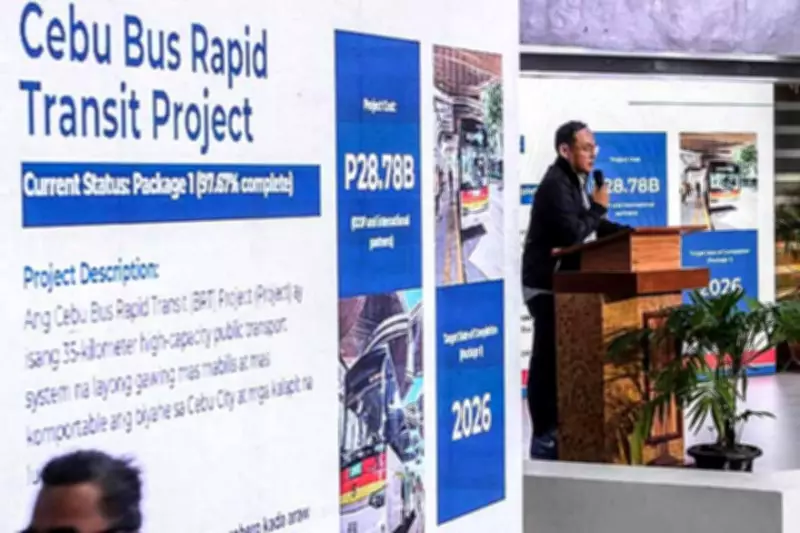
In a significant update on the long-awaited Cebu Bus Rapid Transit (BRT) project, Transportation Secretary Giovanni Lopez provided details during the 2026 Usapang Budget Forum held at the DepEd Ecotech Center in Lahug, Cebu City, on Friday, February 20, 2026. The forum, attended by other Cabinet officials, highlighted progress and ongoing challenges for this critical infrastructure initiative.
Package 1 Ready for March 2026 Launch
After more than a decade of delays and anticipation, the Cebu BRT is finally poised to begin operations. Secretary Lopez confirmed that Package 1 of the system, which runs from the Cebu South Bus Terminal to the Fuente Osmeña Circle, is 97 percent complete and scheduled to start carrying passengers by March 2026. This initial phase is expected to accommodate up to 34,000 daily passengers, offering a substantial improvement to local travel efficiency and congestion relief.
Final Hurdles: Paperwork and Testing
The remaining three percent of work involves not construction, but compliance with stringent international requirements, as the project is funded by the World Bank. Secretary Lopez emphasized that "it's not only what you see physically"; ensuring all documents and certifications are complete is crucial. To guarantee a smooth rollout, the Department of Transportation will conduct dry runs or practice sessions before public access begins.

Controversial Capitol Station Remains Unresolved
A major obstacle persists with the planned bus station near the Cebu Capitol, a protected historical landmark. Concerns from the National Historical Commission and the Provincial Government center on how a modern station might impact the building's aesthetic and historical integrity. Governor Pamela Baricuatro noted that the Province will meet on Monday, February 23, to determine its official stance. However, officials clarified that the March launch can proceed without this station, utilizing alternative stops along the route temporarily.
Future Plans and Funding Strategies
While Package 1 nears completion, the broader CBRT project faces pressure due to delays dating back to 2014. Secretary Lopez indicated that the government is exploring new funding and operational models, including potential Public-Private Partnerships for managing and maintaining the system. This approach aims to ensure long-term reliability and sustainability for the transit network.