Senate Renews Push for Last-Mile Schools Legislation to Address Education Inequities
A legislative proposal aimed at institutionalizing and securing sustained funding for last-mile schools is receiving renewed attention in the Senate, with the goal of closing education access gaps in geographically isolated and disadvantaged communities across the Philippines.
Bill Details and Objectives
Senator Francis Pangilinan announced on Monday that Senate Bill No. 1842, known as the proposed Last Mile Schools Act, seeks to integrate last-mile schools into the public basic education system under a permanent policy framework. The bill is designed to ensure that educational opportunities are accessible to all Filipino learners, regardless of their location.
"Education should be within reach. It is our responsibility, our obligation as lawmakers, to ensure that there are learning opportunities and established education systems for every Filipino learner, regardless of where they live," Pangilinan emphasized.

Criteria for Identifying Last-Mile Schools
The proposal establishes specific criteria for identifying last-mile schools, which include:
- Schools with fewer than four classrooms
- Institutions utilizing makeshift or non-standard rooms
- Facilities with irregular or no electricity supply
- Schools that have not received funding for repairs or new construction in the past four years
Additionally, schools located at least one hour away from a city or municipal center, or situated in difficult terrain, may also qualify under the bill's provisions.
Implementation and Infrastructure Development
Under the proposed legislation, the Department of Education would be mandated to develop tailored programs covering various aspects of educational delivery. These programs would include:
- Learning delivery methods
- Teacher deployment strategies
- Staffing standards
- Learner support services
- Maintenance funding formulas
- Performance monitoring systems
To address critical infrastructure gaps, the measure directs inter-agency coordination among several government departments:
- The Department of Public Works and Highways would be tasked with constructing access roads
- The Department of Energy and the National Electrification Administration would provide electricity solutions
- The Department of Information and Communications Technology would install communications and IT systems
Case Study: Kanggabok Elementary School
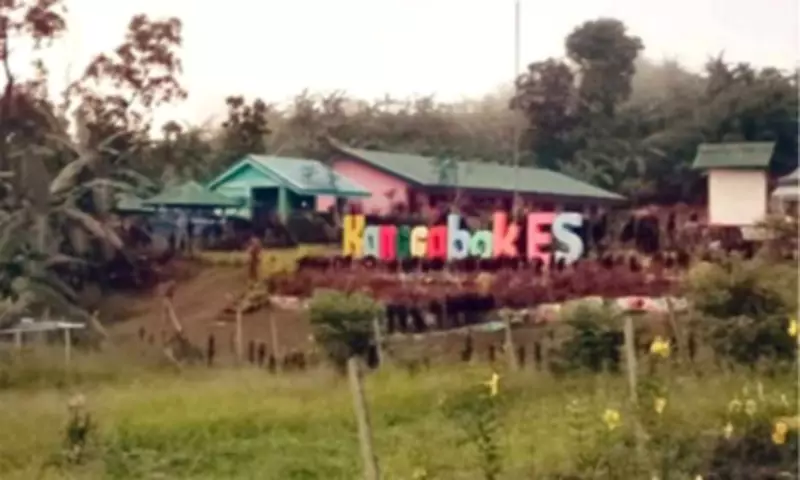
The bill's relevance is highlighted by schools like Kanggabok Elementary School, located in the remote Sitio Kanggabok, Barangay Nagbinlod in Sta. Catalina, Negros Oriental. This institution exemplifies the challenges faced by last-mile schools in isolated communities, where basic infrastructure and resources are often lacking.
The renewed Senate attention on this legislation comes at a crucial time, as education disparities between urban and remote areas continue to persist. By establishing a permanent framework and dedicated funding mechanism, the Last Mile Schools Act aims to create sustainable educational systems that can withstand geographical and logistical challenges.
The comprehensive approach of the bill addresses not only immediate infrastructure needs but also long-term educational quality through specialized programs and continuous monitoring. This legislative effort represents a significant step toward ensuring that every Filipino child, regardless of their community's remoteness, has access to quality basic education.