
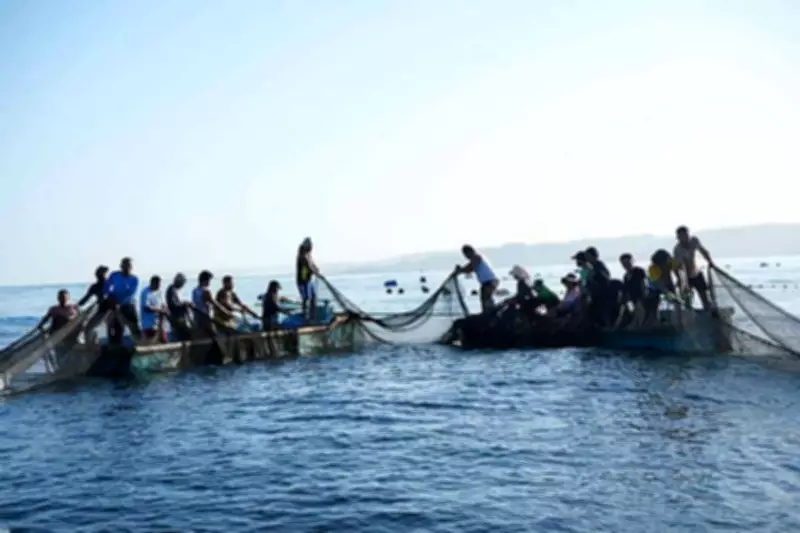
In Tuburan, Cebu, fisherfolk have resumed harvest operations under the fish corral project, known locally as lambaklad, managed by the Bureau of Fisheries and Aquatic Resources-Central Visayas. This initiative follows a nets-off period and recorded a combined catch of over 323 kilograms, valued at nearly P67,000, on March 18–19, 2026. The agency highlighted the program's role in boosting incomes and promoting sustainable, eco-friendly fishing practices that are selective and reduce environmental impact.
Cebu Leads in Fishing for Own Consumption
Fishing in Cebu is not merely a commercial activity but a vital means of putting food on the table. According to 2022 data from the Philippine Statistics Authority, released on April 8, 2026, Cebu ranked first nationwide in marine capture fishing activities intended solely for own consumption. The province also led in the category of mainly for own consumption with some for sale, underscoring fishing's critical role as a primary food source for coastal households.
Central Visayas as a Major Fishing Hub
At the regional level, Central Visayas emerged as a significant fishing hub, with 85,663 household-based marine capture fishing operations, accounting for 11.4 percent of the national total. The region topped operations solely for own consumption, while Eastern Visayas led in those mainly for own consumption with some for sale. Specifically, Central Visayas had 25,758 operations only for own consumption and 15,273 mainly for own consumption with some for sale.

Cebu's Prominence Across Fishing Categories
Cebu consistently ranked among the top 10 provinces nationwide across all fishing purposes. It placed first in both only for own consumption and mainly for own consumption with some for sale, tenth in only for sale, fifth in mainly for sale with some own consumption, and fourth in equally for sale and for own consumption. Other provinces like Palawan led in only for sale and mainly for sale with some own consumption, while Negros Occidental topped equally for sale and for own consumption. Bohol also featured prominently, ranking second in only for own consumption and fourth in mainly for own consumption with some sale.
Small-Scale and Informal Industry Dominance
National data reveals that the fishing industry remains largely informal, with 98.6 percent of the country's 750,575 marine fishing operations classified as single proprietorships. This underscores the reliance of Cebu's coastal communities on fishing for both livelihood and food security, highlighting the sector's household-driven nature.
Traditional Landing Centers and Equipment
Most marine capture fishing operations nationwide depend on traditional landing centers without formal infrastructure. Of the 750,473 operations with at least one landing site, 75.6 percent unloaded their catch in traditional areas, followed by privately owned centers at 13.6 percent and local government unit-managed sites at 6.1 percent. Only a small percentage used facilities run by fishing associations, cooperatives, or the Philippine Fisheries Development Authority.
The fishing fleet is predominantly small-scale and self-owned. Out of 612,744 fishing boats recorded nationwide, 79.1 percent were owned by operators, with 15.3 percent used rent-free and 5.7 percent rented. By type, 60.9 percent had both an engine and an outrigger, while others included boats without an engine but with an outrigger, those with an engine but no outrigger, and those without both. These figures reinforce the image of a basic, traditional fishing industry reliant on simple equipment and systems.