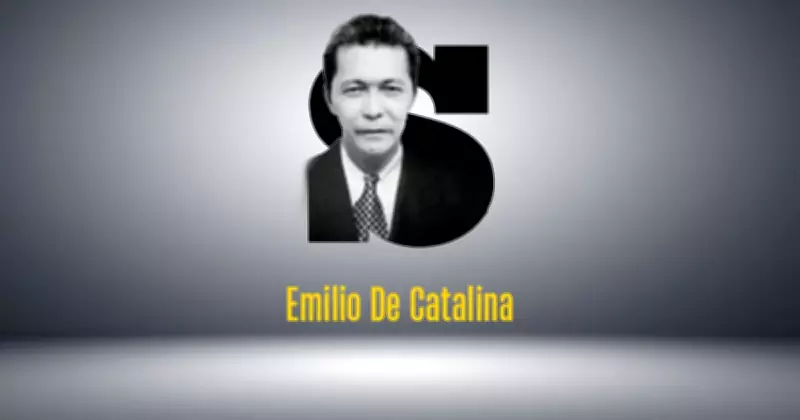
In a groundbreaking linguistic exploration, Dr. Emilio de Catalina has elucidated the precise phonetic characteristics of fricative sounds within the Cebuano-Visayan language. Published on April 12, 2026, this study delves into the intricate articulatory processes that define these consonants, where airflow is constricted through a narrow passage, such as between the upper and lower teeth.
Defining Fricatives in Cebuano-Visayan
In linguistic terms, a fricative refers to a consonant sound produced by forcing air through a constricted channel, creating a audible friction-like noise. For the Cebuano-Visayan language, this phenomenon is exemplified by the letters s and h. When pronounced, these letters emit sounds that closely mimic specific auditory experiences native to the language.
The Native Equivalents: 'Sitsit' and 'Hagawhaw'
Dr. de Catalina's research identifies sitsit as the most accurate term for the sound of the letter s. This word captures the hissing or whistling quality inherent in its pronunciation, aligning perfectly with the linguistic concept of a fricative. Similarly, for the letter h, the term hagawhaw is proposed. This describes a subtle, breathy exhalation or a faint accompanying sound that occurs during articulation, effectively mirroring the fricative nature of h.

While English universally employs the term fricative for both sounds, Cebuano-Visayan boasts distinct and precise words for each. This linguistic specificity allows for more nuanced scholarly discussions and educational applications within the language community.
Practical Applications and Examples
The study includes detailed examples in Table 2, illustrating how the sounds of s and h manifest in various positions within words—whether at the beginning, middle, or end. For instance, the sitsit sound of s can be heard clearly in words regardless of its placement, producing that characteristic hissing noise. Likewise, the hagawhaw sound of h exhibits its breathy quality across different word positions, akin to a soft whisper or gentle puff of air.
Broader Implications for Philippine Linguistics
This research corroborates the observations of linguist Robert Blust, who noted that many Philippine languages feature fricatives. By providing native terminology, Dr. de Catalina's work enhances the understanding and preservation of Cebuano-Visayan phonetics. It underscores the richness of indigenous linguistic systems and their capacity to describe complex phonetic phenomena with precision.
Ultimately, this study not only advances academic knowledge but also fosters greater appreciation for the linguistic diversity within the Philippines, encouraging further exploration into other native languages and their unique sound structures.