
Senate Resolution Ignites Government Clash Over West Philippine Sea Remarks
A heated debate regarding the West Philippine Sea (WPS) has escalated into a public conflict among government officials, triggered by the Senate's deliberation on a proposed resolution condemning attacks from the Chinese Embassy against critics of Beijing's actions in the disputed waters.
Roots of the Controversy: Tarriela's Social Media Posts
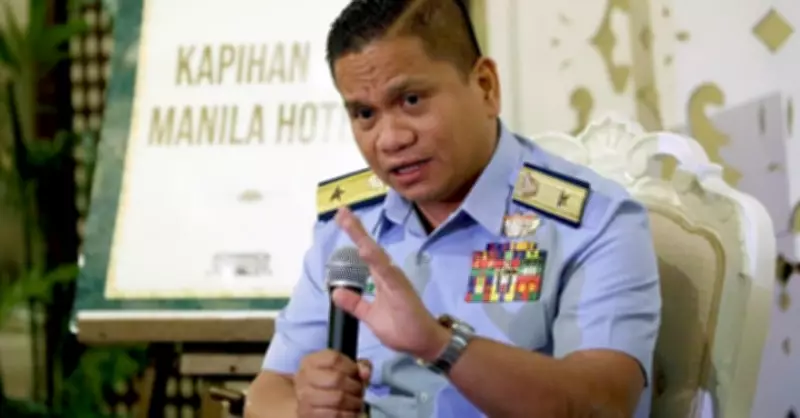
The resolution, introduced by Senator Francis "Kiko" Pangilinan, stems from a fiery "war of words" between Philippine Coast Guard (PCG) spokesperson Commodore Jay Tarriela and several officials of the Chinese Embassy in Manila. The dispute began in mid-January when the Chinese Embassy lodged a diplomatic protest with Malacañang and the Department of Foreign Affairs (DFA) against Tarriela.
The protest targeted Tarriela's explicit use of what were described as malicious caricatures of Chinese President Xi Jinping in his public speeches and social media posts. Guo Wei, deputy spokesperson for the Chinese Embassy, asserted that Tarriela had "crossed the red line," labeling his actions a serious violation of China's political dignity and a blatant provocation.

"In the face of Tarriela's malicious provocations, we must ask: as a spokesperson of the Philippine Coast Guard, do his smears and slanders against China and Chinese leader represent the stance of the Philippine government?" Guo stated. "As a uniformed service member, should he not be subject to the most basic standards of discipline and ethics? Why is he able to act so recklessly without being held accountable?" he added.
Tarriela's Defense and Broader Implications
In response, Tarriela stood firm on his principles, denying allegations that his posts were damaging to reputation. He insisted they were facts supported by evidence and saw no reason to apologize to the Chinese Embassy. Tarriela further characterized China's protest as a tactic to divert attention from what he described as their repeated aggressive behavior in the WPS.
The controversy deepened on Wednesday, February 4, 2026, when Senator Rodante Marcoleta, during a Committee on Appointments hearing, stirred debate by suggesting the Philippines might reconsider its claim to the Kalayaan Island Group (KIG). He argued some parts lie outside the country's 200-nautical-mile exclusive economic zone. Marcoleta also challenged Tarriela, claiming his posts against China and President Xi Jinping only heightened tensions rather than resolving them.
Tarriela countered by inviting the legislator to join a maritime domain awareness (MDA) flight over the KIG to witness the situation firsthand. Marcoleta responded that any visit should be preceded by a "friendly debate" with maritime law experts like retired Justice Antonio Carpio and UP Professor Jay Batongbacal.
Senate Deliberations and Political Divisions
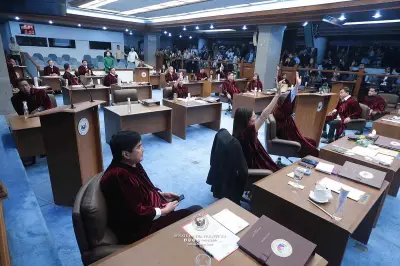
During Senate discussions on Monday, February 9, 2026, regarding Senate Resolution 256, Minority Leader Alan Peter Cayetano challenged his colleagues' approach, particularly their support for Tarriela's criticisms of China. Cayetano argued the resolution should not appear to endorse Tarriela's actions, as he believed the Coast Guard official was "wrong" and urged the Senate to exercise caution.
"We cannot pass this resolution saying that Commodore Tarriela is correct because he's wrong. If he simply stated, 'I love the Philippines, I will fight for our territory, I'll fight for our sovereign rights, I will do my duty -- but sorry, dahil uminit ang ulo ko, nilabas ko 'to, pero hindi official 'yan,' tapos tayo," Cayetano remarked, emphasizing the need for restraint in official statements.
This ongoing dispute highlights the complex interplay between national sovereignty, diplomatic protocols, and freedom of expression in the context of the West Philippine Sea tensions, reflecting broader political divisions within the Philippine government.