
Phivolcs Confirms No Tsunami Threat Following Sultan Kudarat Earthquake Swarm
Seismologists at the Philippine Institute of Volcanology and Seismology (Phivolcs) have provided crucial reassurance to the public regarding the recent seismic activity in Sultan Kudarat. On Wednesday, January 28, 2026, the agency officially confirmed that no tsunami warning has been issued in connection with the series of earthquakes that have been affecting parts of the province over the past two weeks.
Details of the Seismic Activity
Phivolcs Executive Director Teresito Bacolcol explained that the strongest earthquake recorded during this period was a magnitude 5.9 event that struck the southern Philippines. According to Bacolcol, this earthquake was not powerful enough to trigger a tsunami, providing significant relief to concerned residents and local authorities.
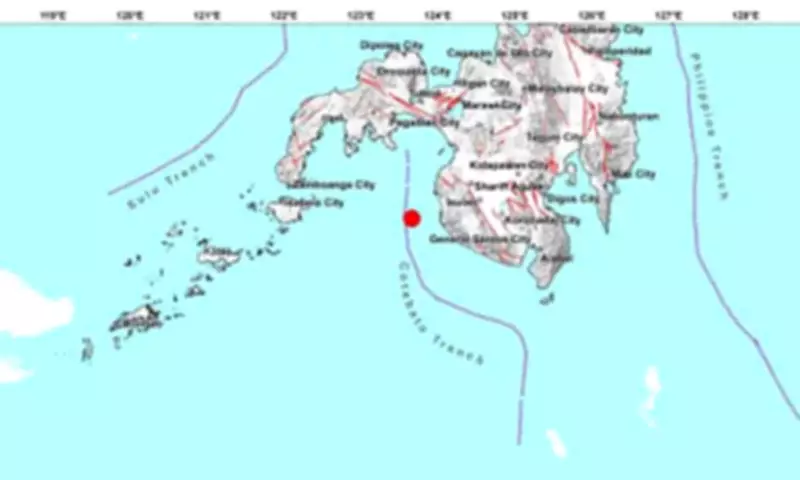
The agency has been closely monitoring the seismic activity, with particular attention to the vicinity of Kalamansig, Sultan Kudarat, where a substantial number of tremors have been recorded. From January 16 to January 28, Phivolcs documented a total of 1,646 earthquakes in the area, classifying this pattern as an earthquake swarm rather than isolated seismic events.

Bacolcol noted that five of the earthquakes recorded on Wednesday reached intensities higher than intensity V, meaning they were strongly felt by residents in nearby communities. This heightened awareness has prompted both official responses and public concern throughout the affected regions.
Scientific Explanation Behind the Swarm
The seismic activity has been traced to the Cotabato Trench, a major tectonic feature off the coast of Mindanao. Bacolcol explained that the earthquake swarm resulted from the slow and gradual release of accumulated stress along this trench. This gradual movement eventually triggered the magnitude 5.9 earthquake, but does not necessarily indicate an imminent major quake.
"At present, it is difficult to say whether this will lead to a major movement, and we do not have the technology to predict if a larger earthquake will occur next," Bacolcol stated during a national radio interview. He emphasized that the current earthquake swarm reflects the gradual release of stress along the Cotabato Trench rather than a single, large rupture.
Precautionary Measures and Public Safety
Despite the absence of a tsunami threat, Bacolcol urged residents in affected areas to remain vigilant, particularly as aftershocks may continue in the coming days. He advised local government units and communities to:
- Review their preparedness measures
- Be ready for possible evacuations should conditions worsen
- Stay informed through official advisories
- Inspect structures for damage
As a precautionary measure, local authorities in Sultan Kudarat have ordered the suspension of classes and work in areas most affected by the seismic activity. On January 28, classes and work in the towns of Kalamansig and Lebak were suspended starting Wednesday, following reports of continued earthquakes and the possibility of aftershocks.
Official Response and Monitoring
Governor Datu Pax Ali Mangudadatu announced the suspension through a social media post, stating that the decision was made to prioritize public safety. In an advisory, the governor specified that the suspension covers work and classes at all levels, in both public and private institutions, and will remain in effect until further notice "to ensure the safety of everyone."
Local disaster risk reduction and management offices have been placed on heightened alert, while authorities continue to assess possible damage to infrastructure and monitor the situation on the ground. The Cotabato Trench, which is part of the complex fault system affecting southern Philippines, has historically generated moderate to strong earthquakes, though not all movements result in destructive events.
While no tsunami threat has been identified and no major quake is currently anticipated, Phivolcs maintains that continued vigilance remains essential as aftershocks may persist. The agency's ongoing monitoring and public advisories aim to balance scientific accuracy with practical safety measures for affected communities.