Public transport workers and daily commuters across the Philippines are preparing for a significant financial strain as Pilipinas Shell implements a substantial fuel price hike on Tuesday, April 7, 2026. This sharp increase, driven by a looming global energy crisis linked to ongoing conflicts in the Middle East, threatens to make it even more challenging for drivers to earn a living and for consumers to manage their budgets.
Details of the Fuel Price Surge
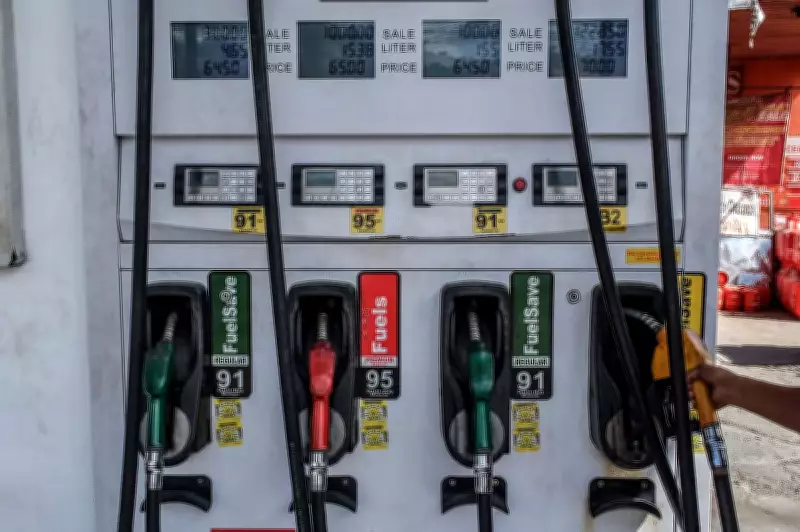
Starting at 6 a.m., the price adjustments are severe: diesel will surge by a staggering P19.80 per liter, kerosene will increase by P9.10 per liter, and gasoline will rise by P5.90 per liter. As of now, other petroleum companies have not yet announced their own rate changes, leaving many uncertain about the broader market impact.
This massive increase comes at an already difficult time for consumers. Last week, the retail price of diesel had already crossed the P130 per liter mark, while gasoline shot past P100 per liter, adding to the economic pressures faced by households and businesses alike.

Government Intervention with Financial Aid
In response to these skyrocketing costs, the government has stepped in with financial assistance to help transport workers survive. In late March, the Land Transportation Franchising and Regulatory Board distributed fuel subsidies to more than 13,000 drivers and operators across Central Visayas.
This regional payout is part of a larger P2.4 billion national strategy directed by President Ferdinand Marcos Jr. and the Department of Transportation. The primary goal is to protect vulnerable workers and ensure the transit sector continues to operate smoothly during these challenging times.
Tiered Subsidy System for Fairness
To ensure fairness, the government has implemented a tiered system based on different operational costs:
- Buses: Operators receive P10,000 per unit, while drivers get P5,000.
- Minibuses: Operators collect P9,000 per unit, and drivers receive P5,000.
- Taxis: Operators are allotted P2,000 per unit, with drivers receiving P5,000.
Push for Modernization in Public Transport
For UV Express vehicles, operators of modern units are granted P10,000, while traditional operators receive P5,000. All UV Express drivers are provided with P5,000. Similarly, operators of modern jeepneys receive P10,000 per unit, whereas traditional jeepney operators and other public utility vehicle (PUV) operators receive P5,000.
This disparity in financial support is intentional, as the government aims to encourage operators to shift away from older, less efficient vehicles by offering higher payouts to modern units. This initiative is part of the ongoing PUV modernization program, which seeks to improve efficiency and reduce environmental impact.
Additional Support on the Horizon
Drivers for specific jeepney and utility vehicles receive a smaller P1,500 share from the main fuel subsidy fund because they are tied to a different government assistance track. Central Visayas officials are currently collaborating with the Department of Social Welfare and Development to enhance these workers' incomes through the Assistance to Individuals in Crisis Situations program.
Thanks to this parallel initiative, nearly 9,000 modern and traditional jeepney, taxi, and utility vehicle drivers are scheduled to receive additional financial support in August, providing further relief in the coming months.
Challenges and Future Outlook
Meanwhile, attention is turning to delayed payouts for specific groups. The regional transportation board is currently endorsing nearly 200 additional UV Express drivers and operators to be added to the national program. Local authorities originally identified more than 30,000 potential beneficiaries, but the national office scaled down the final number by excluding tourist transport and trucking services.
While these subsidies offer much-needed relief today, their long-term success depends heavily on whether global oil markets stabilize in the coming months. If international conflicts continue to drive prices upward, the National Government may be compelled to take even stronger action to sustain public transportation during these historic industry reforms.