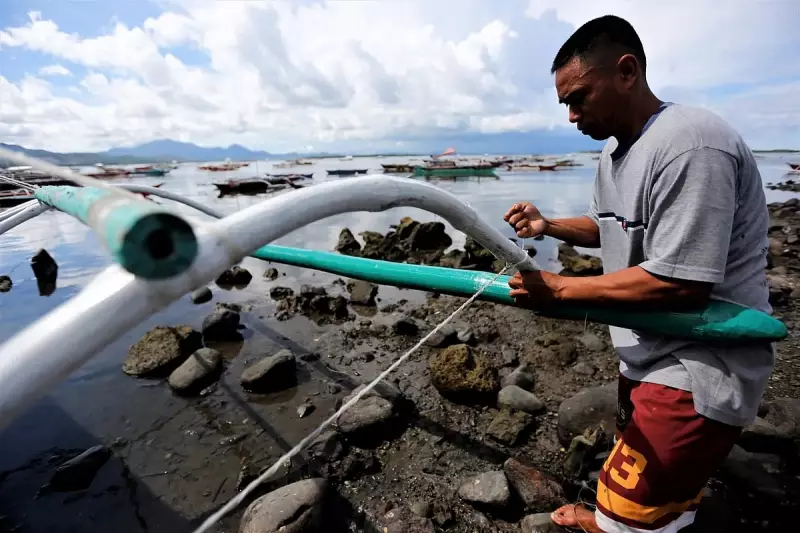
For generations, the sea has been both life and livelihood for countless Filipino families. Yet today, small-scale fishermen across the nation, from the coastal villages of Palawan to the towns of Eastern Samar, are fighting a desperate battle for survival. They face a perfect storm of illegal fishing, intense competition from large commercial vessels, and declining fish stocks, pushing a traditional way of life to the brink.
A Daily Struggle for Survival at Sea
The reality is harsh and personal. Teofilo Padel, a 59-year-old fisherman from Balangiga, Eastern Samar, describes returning home empty-handed or with a catch so meager it barely covers a day's expenses, let alone the high cost of fishing gear. "Sometimes we come home with nothing," Padel shares, highlighting the precarious existence of providing for his three children. He fears the encroachment of large fishing companies into municipal waters, areas vital for small fishers' daily catch. "It is our only source of livelihood. We won't be able to survive," he states bluntly.
This sentiment is echoed by Jose Barcil, a 55-year-old father of four from General MacArthur town in Eastern Samar. He points to the added challenge of weather patterns like the habagat (southwest monsoon), which often prevents small boats from venturing out. "And when we are able to fish, if we catch anything at all, it's just enough to sell a small amount," Barcil explains. The temptation to turn to illegal methods for a better catch has crossed his mind, but fear holds him back. He alleges that large-scale illegal operators often evade justice. "They are the ones being protected by the government," Barcil claims.

Data Confirms a Deepening Crisis
The anecdotes from the frontlines are supported by alarming data. The Police Regional Office in Eastern Visayas reported intercepting 40 illegal fishing activities in the region from January to July 15, 2025 alone, underscoring the scale of the problem. Meanwhile, ocean conservation group Oceana Philippines paints a grim national picture. Using satellite technology, they detected a sharp 10.5% increase in suspected illegal fishing activity from 2023 to 2024, with boat detections rising to 31,843.
This illegal surge coincides with a worrying decline in fish populations. Philippine Statistics Authority data shows a consistent drop in catches for key species over two decades. For instance, the catch of Bali sardinella (tamban) fell from a peak of over 334,000 metric tons in 2010 to around 253,000 in 2024. The crisis has been exacerbated by a December 2024 Supreme Court ruling that allowed commercial fishing vessels to operate within the 15-kilometer municipal fishing zone, a decision that threatens over two million artisanal fisherfolk.
A Unified Call for Protection and Action
In response to these mounting threats, a broad coalition is calling for change. In February 2025, 48 prelates and Caritas Philippines signed a manifesto supporting small fishers and urging the national government to affirm their preferential rights in municipal waters. The fishermen themselves are pleading for decisive intervention. "The government should not allow this kind of policy because small fishermen really suffer. These large fishing companies leave almost no fish behind," asserts Jose Barcil.
Despite the hardships, a thread of hope remains, woven into the future of their children. Barcil, though uncertain, is willing to pass his knowledge on. "I want to pass this on to my children... Whatever the future brings, it's up to them," he says. For now, fishermen like Teofilo Padel hold fast to the sea that defines them. "I love the sea. It is my daily life. If I lose it, I lose my livelihood," he declares, a sentiment that encapsulates the high stakes of this fight for the soul of the Philippines' coastal communities.