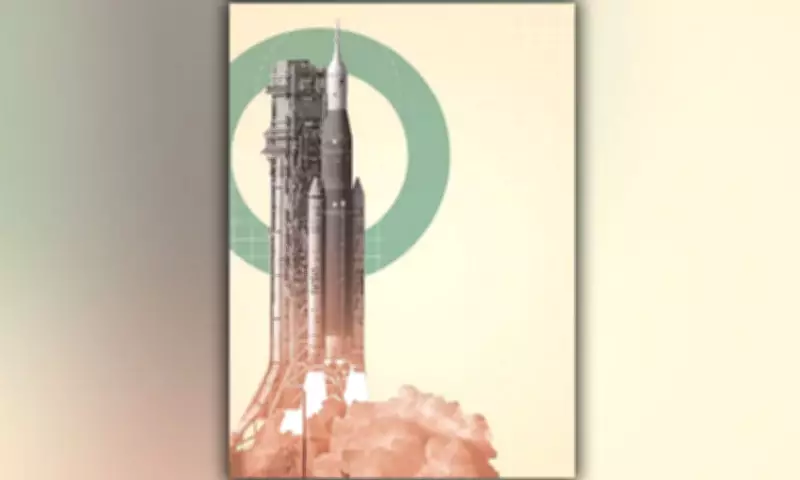
Artemis II: Humanity's Record-Breaking Return to Deep Space Exploration
"We realized the gravity of the mission." These profound words from astronaut Reid Wiseman capture the monumental significance of Artemis II, NASA's upcoming journey that will propel humans to unprecedented distances from our home planet. More than five decades have elapsed since humanity last ventured to the moon, leaving space as a realm both intimately studied through telescopes and probes, yet physically untouched by human presence for generations.
There exists a fundamentally human yearning to explore beyond our terrestrial confines, and perhaps no endeavor embodies this paradoxical blend of human ambition and superhuman challenge more perfectly than space exploration itself. The Artemis II mission, scheduled as a ten-day expedition, will carry its crew of astronauts to a staggering distance of 252,799 miles (406,840 kilometers) from Earth. This achievement will officially surpass the long-standing record established by the Apollo 13 mission back in 1970.
A New Collaborative Era in Space
Representing a multi-billion-dollar program spearheaded by NASA, Artemis II symbolizes far more than a mere record-breaking flight. It heralds a transformative era of international and commercial collaboration in space, where breakthroughs and discoveries made in the cosmos are designed to create tangible ripple effects, driving innovation across numerous industries and technological sectors here on Earth. As global attention increasingly turns skyward, a growing public is seeking to understand the complex language of space science.

Essential Space Terminology Explained
To demystify the mission and foster greater public engagement, here is an expanded guide to key terms from NASA's official glossary, essential for comprehending the scope and mechanics of Artemis II and modern space exploration.
- Translunar Injection Burn: This is a critical, precisely timed engine maneuver where a spacecraft fires its thrusters to escape Earth's gravitational hold and set a course directly toward the moon.
- Lunar Flyby: A maneuver where a spacecraft navigates around the moon without landing, utilizing the moon's gravity to alter its trajectory and speed for the journey home.
- Space Launch System (SLS): NASA's most powerful rocket ever constructed, specifically engineered to transport astronauts and heavy payloads on deep-space missions, including the Artemis program.
- Light-Year: A standard astronomical unit of distance, equivalent to how far light travels in one Earth year. In the vacuum of space, light moves at approximately 671 million miles per hour, making one light-year equal to about 5.8 trillion miles.
- Speed of Light: The ultimate cosmic speed limit, measured at 299,792,458 meters per second. This constant fundamentally shapes how scientists measure distance and time across the vastness of space.
- Artificial Gravity: A theoretical and applied concept in spacecraft design aimed at simulating gravitational force, crucial for maintaining astronaut health and functionality during extended missions.
- Observable Universe: The vast portion of the cosmos that is theoretically visible from Earth, limited by the distance light has had time to travel since the Big Bang.
- Aurora: Spectacular natural light displays, such as the Northern and Southern Lights, caused by charged solar particles colliding with a planet's magnetic field.
- Fluorescence: A phenomenon where a substance absorbs energy and subsequently re-emits it as visible light, commonly observed in space environments like the glowing tails of comets.
Lunar Landmarks and Phenomena
The moon itself, Artemis II's destination, is a world marked by ancient violence and enduring mystery.

- Lunar Craters: These are depression features formed over eons by impacts from asteroids, meteoroids, and comets. The moon's lack of atmosphere and geological activity preserves these craters in remarkable detail.
- Orientale Basin: A colossal, multi-ringed impact crater located on the far side of the moon, previously observed only through images captured by robotic spacecraft.
- Copernicus Crater: A relatively young lunar feature, estimated to be around 800 million years old, distinguished by its bright, pale ejecta material and sharply defined rim.
- Tycho Crater: One of the moon's most conspicuous craters, appearing as a brilliant spot in the southern highlands with a distinctive system of bright rays radiating outward.
- Reiner Gamma: An enigmatic, swirling bright pattern on the lunar surface that continues to puzzle scientists, with its origins not yet fully explained.
- Impact Flashes: These are brief, sudden bursts of light observable from Earth, caused by small meteoroids striking the moon's barren surface.
Artemis II stands as a testament to human curiosity and engineering prowess, bridging a half-century gap in crewed deep space travel and opening a new chapter where the language of the cosmos becomes part of our shared global dialogue.